Thank you for a successful workshop!
Sign-up for our newsletter to learn about events to come from the Wisconsin Trust for Historic Preservation!
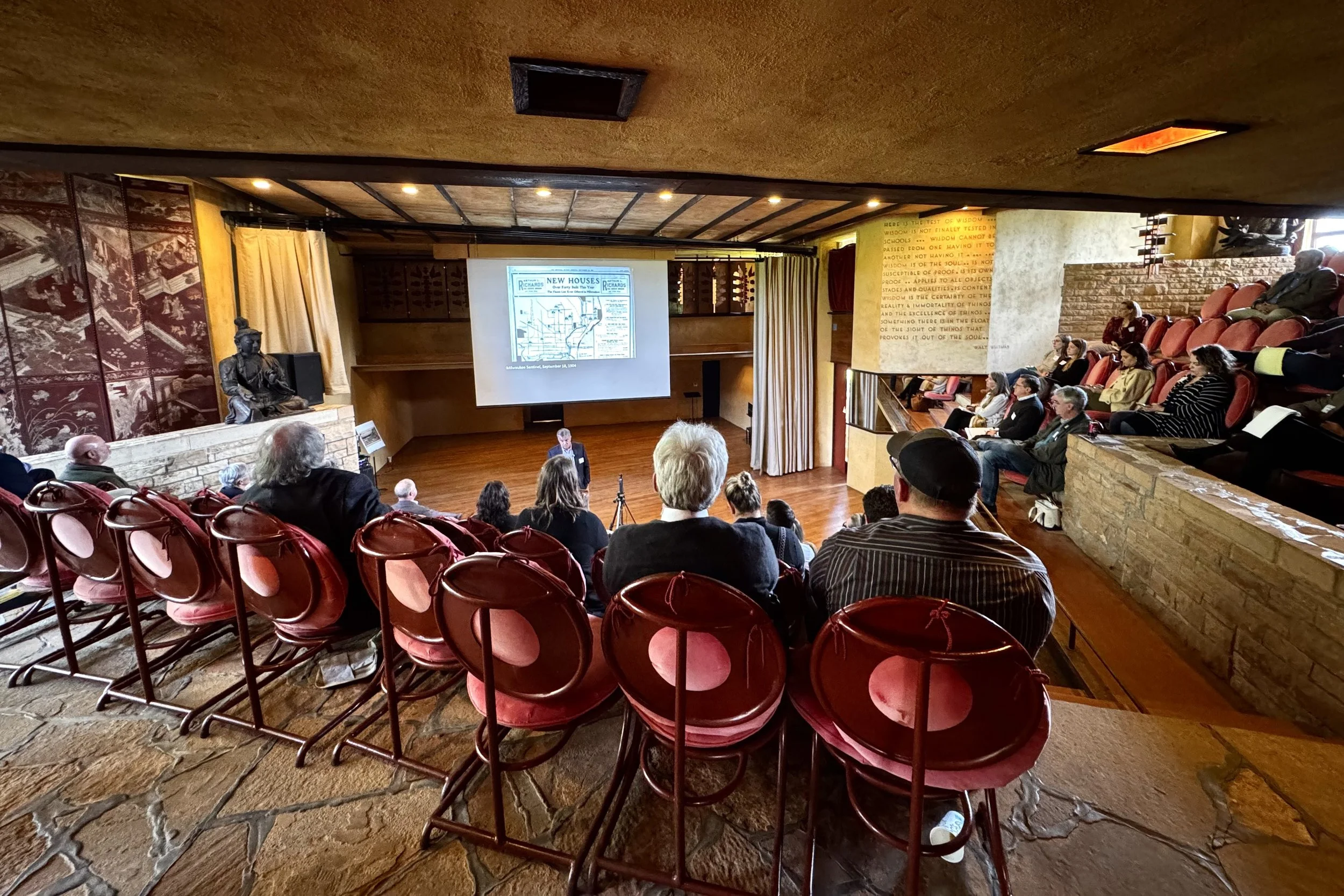
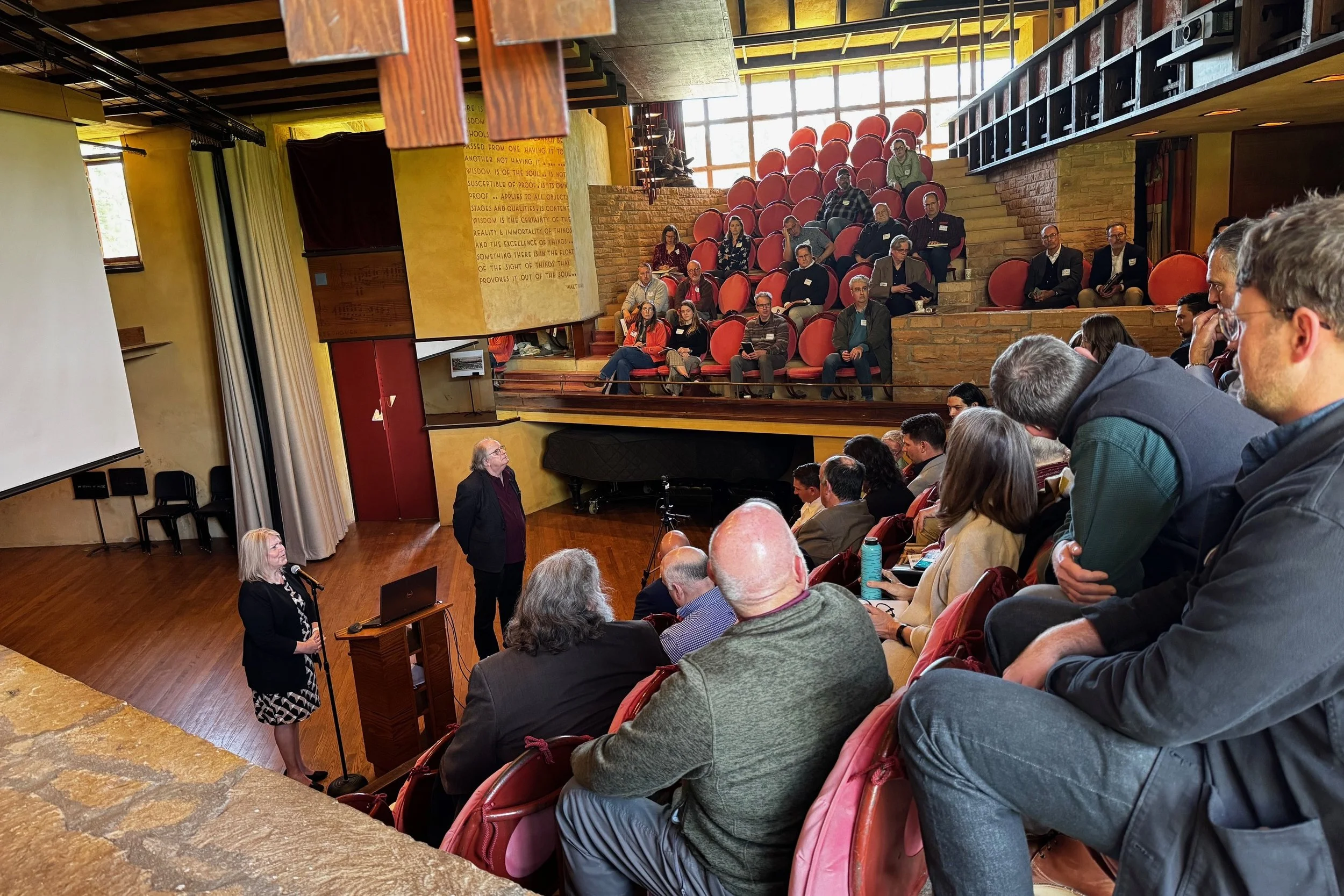
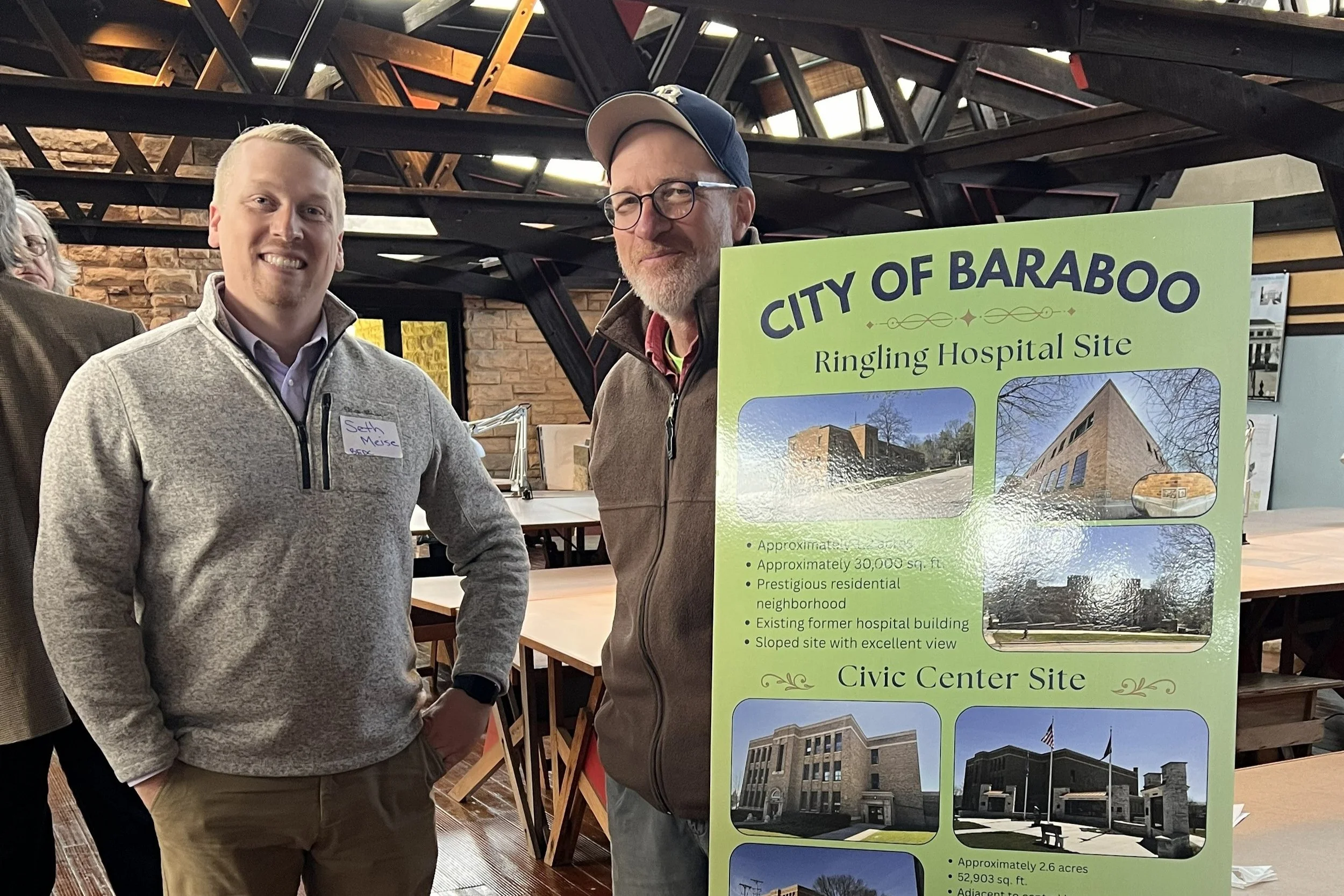
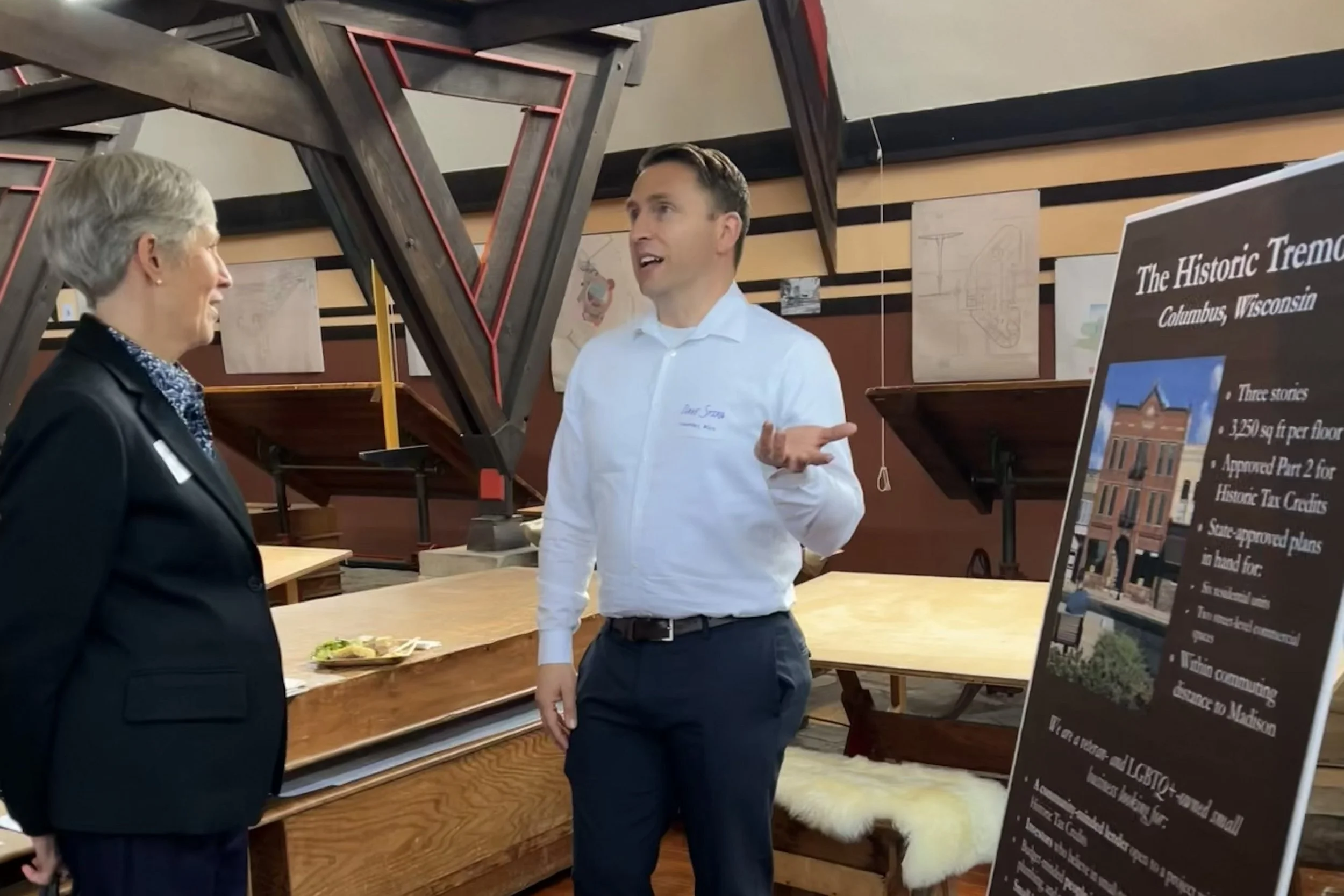
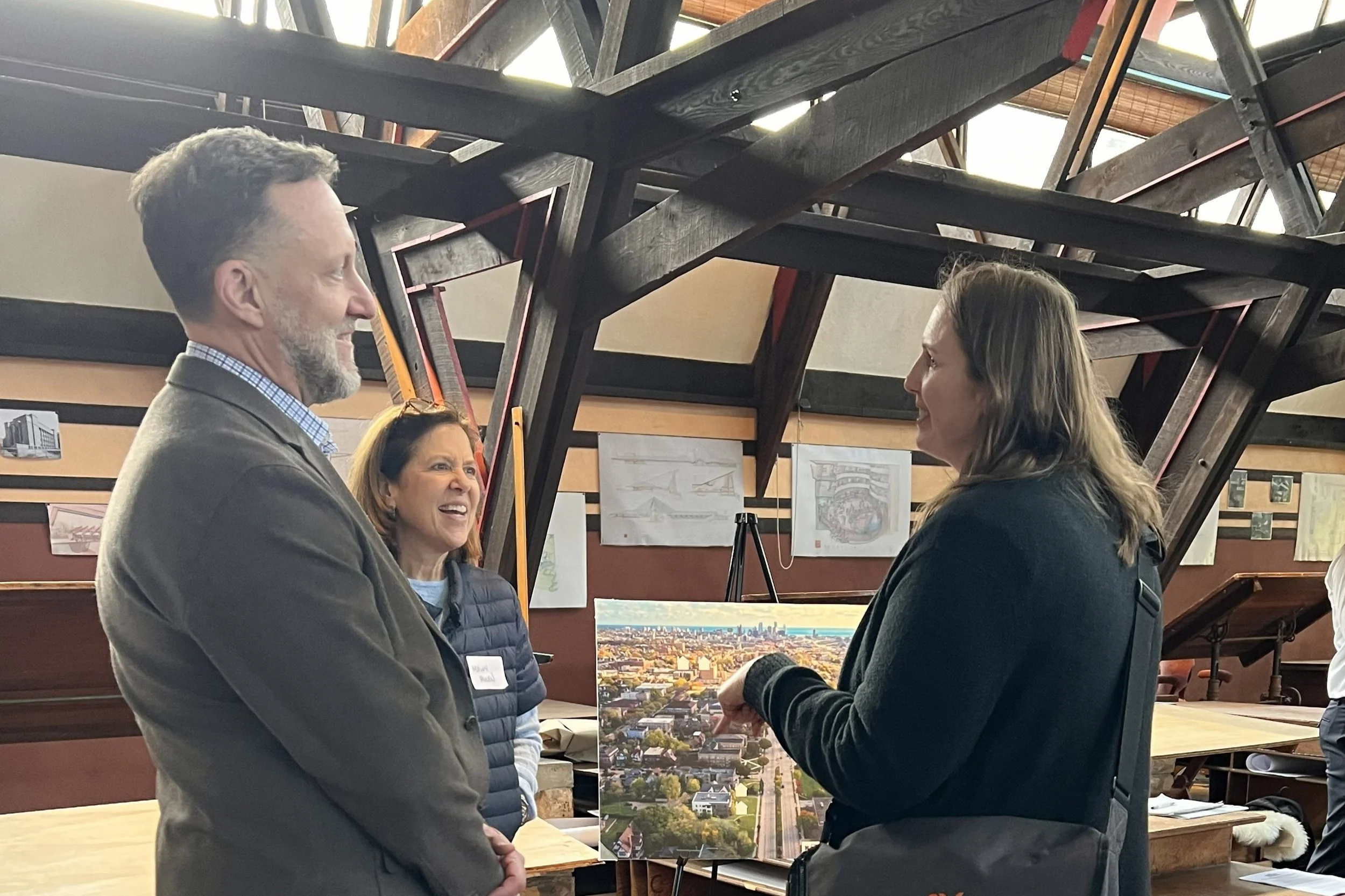
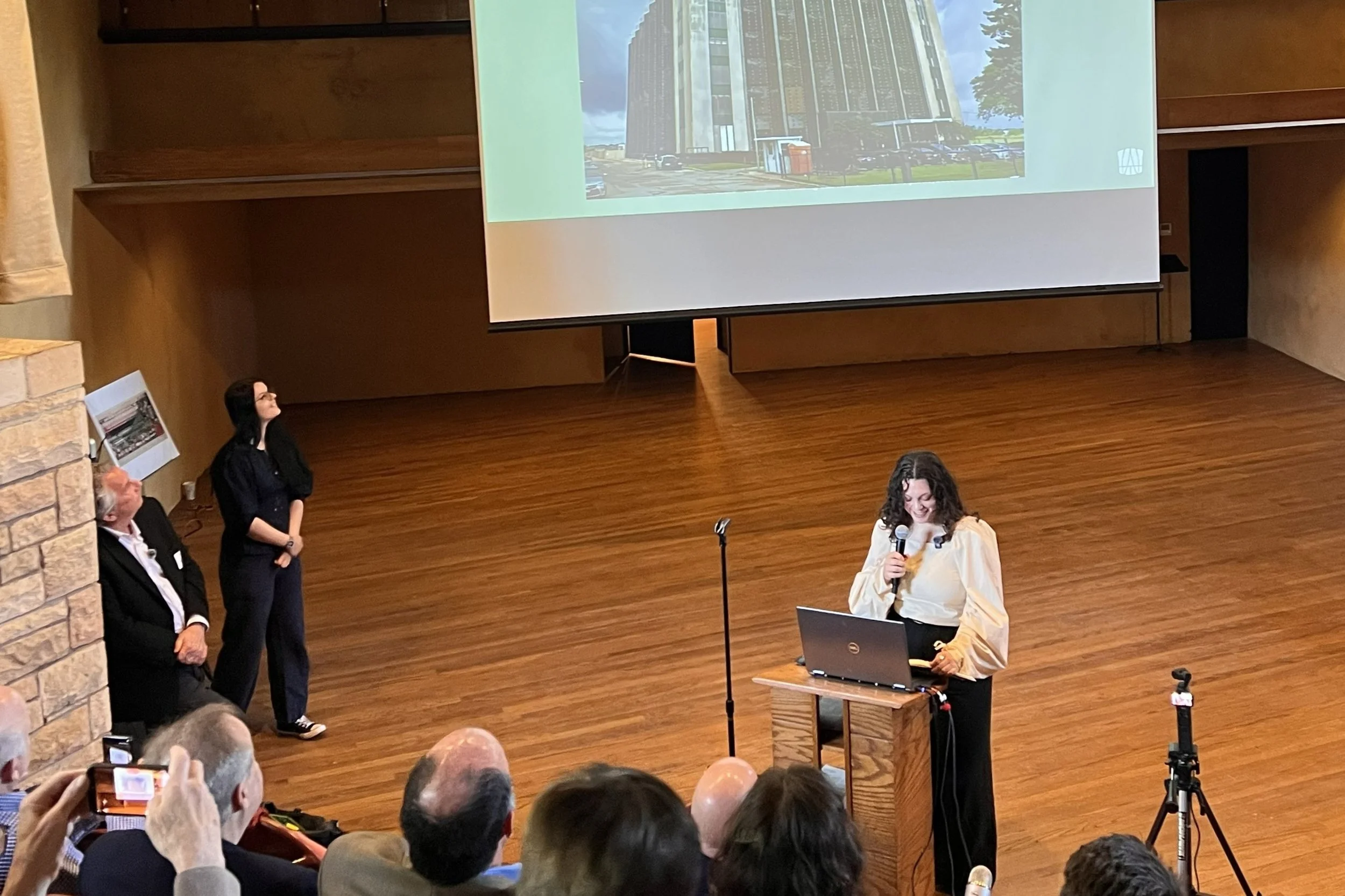
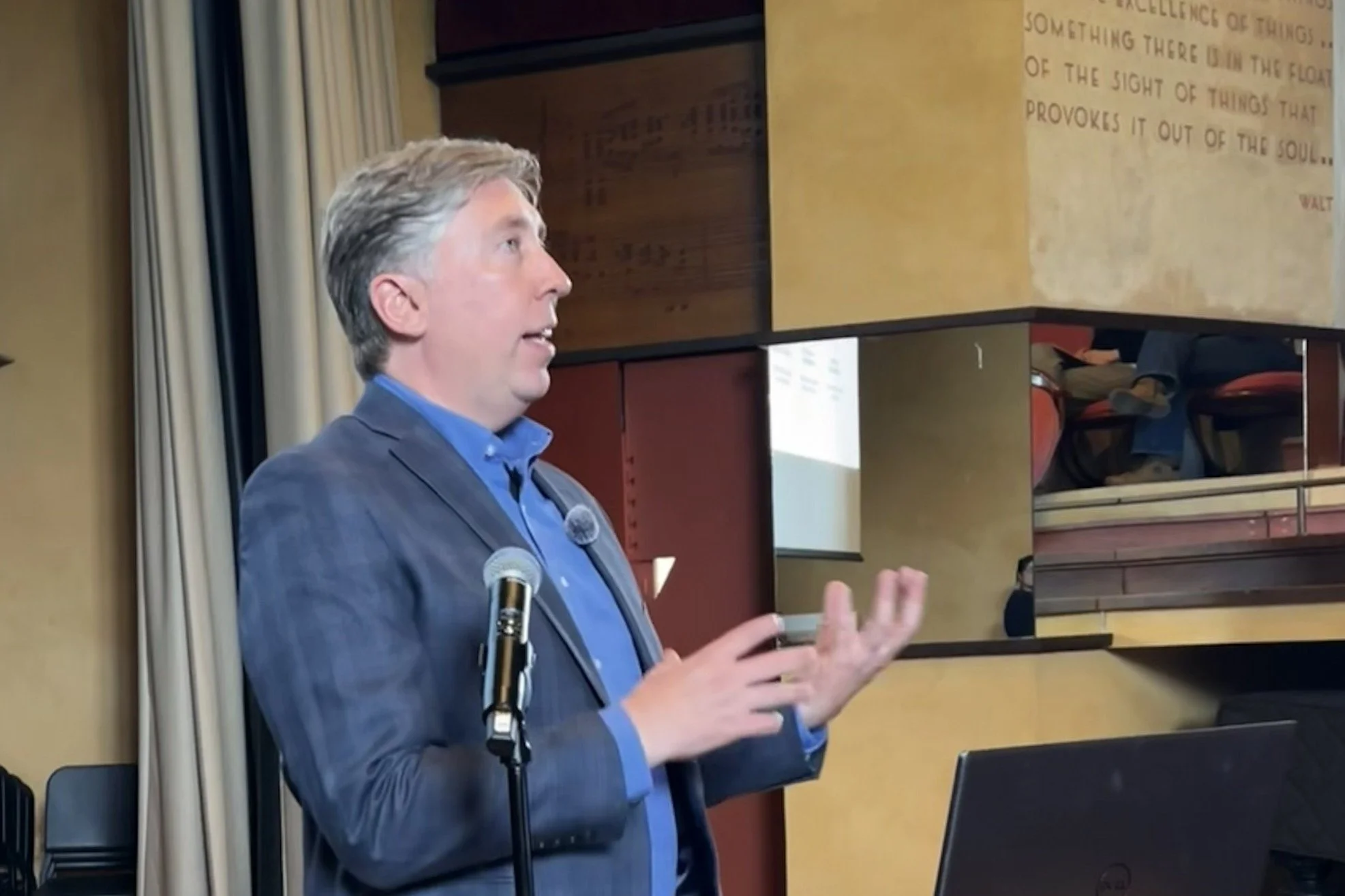
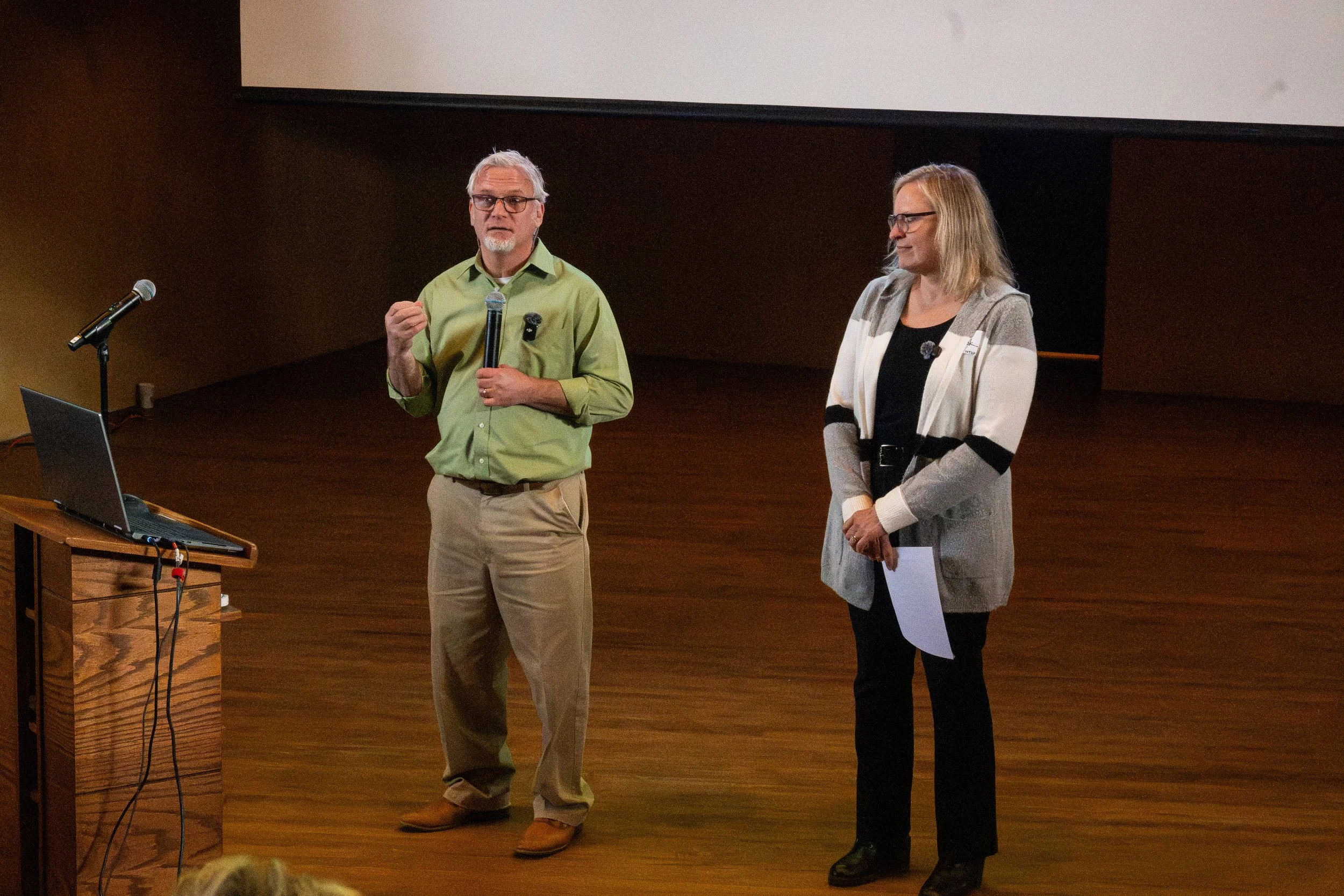
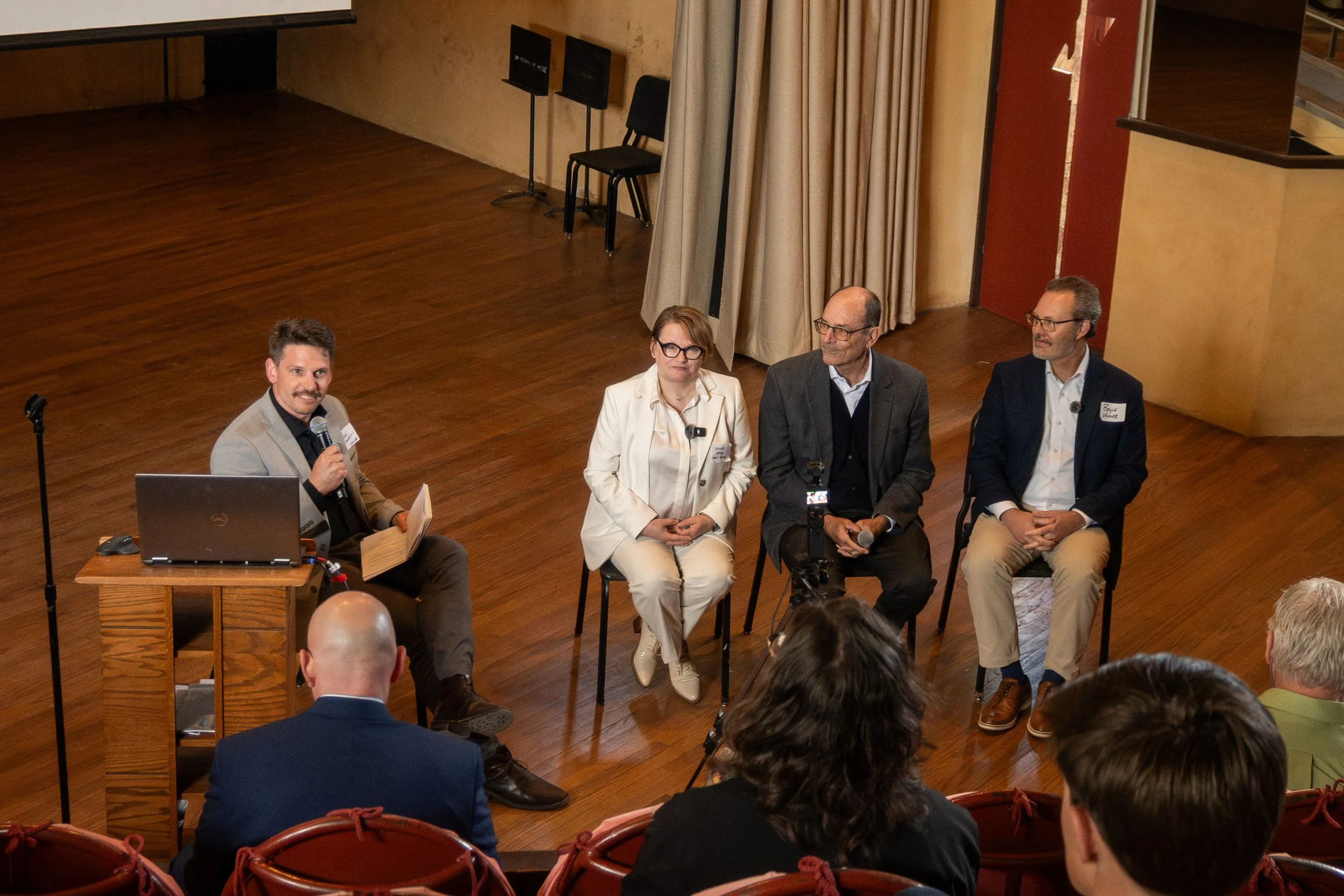
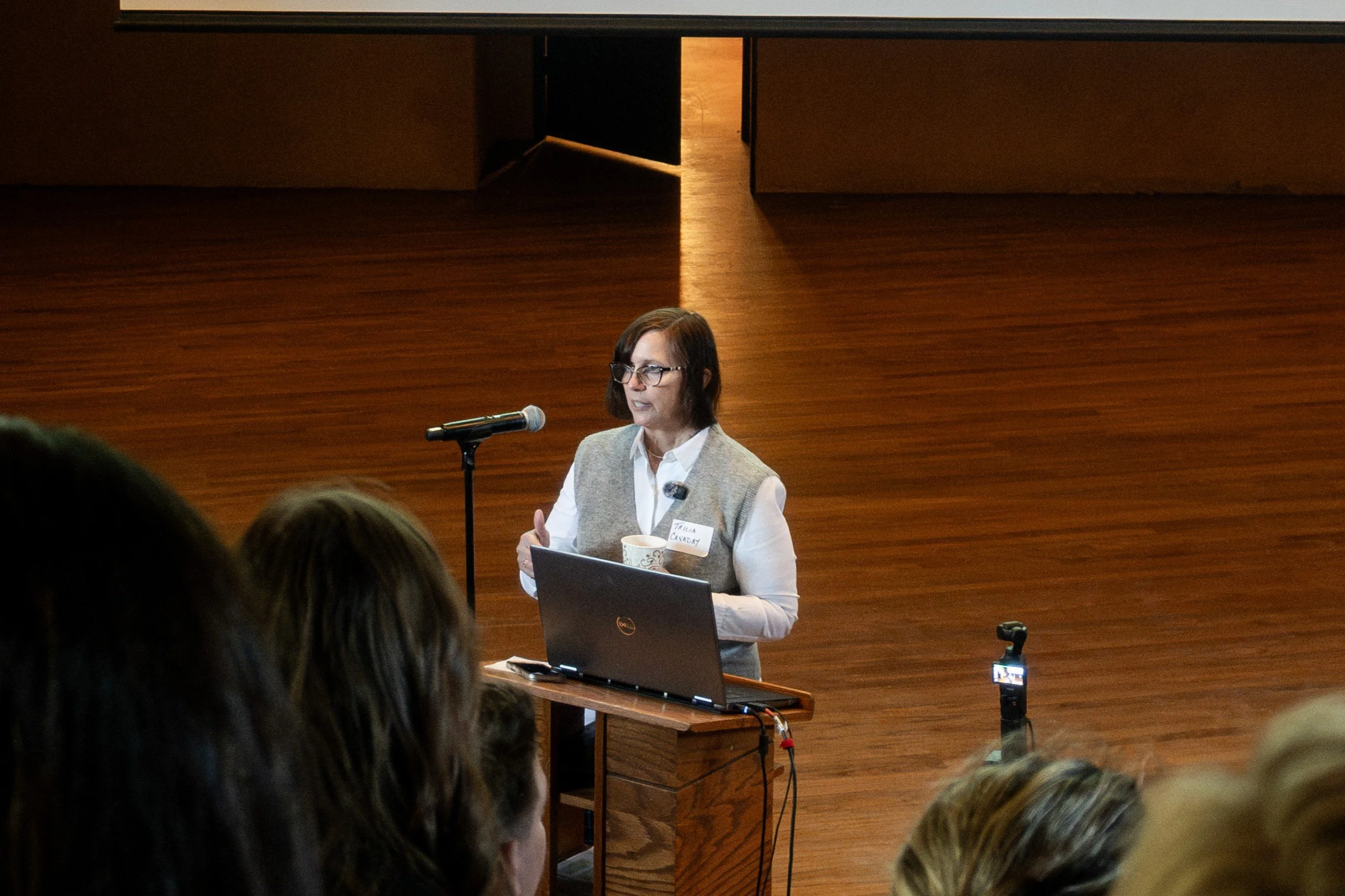
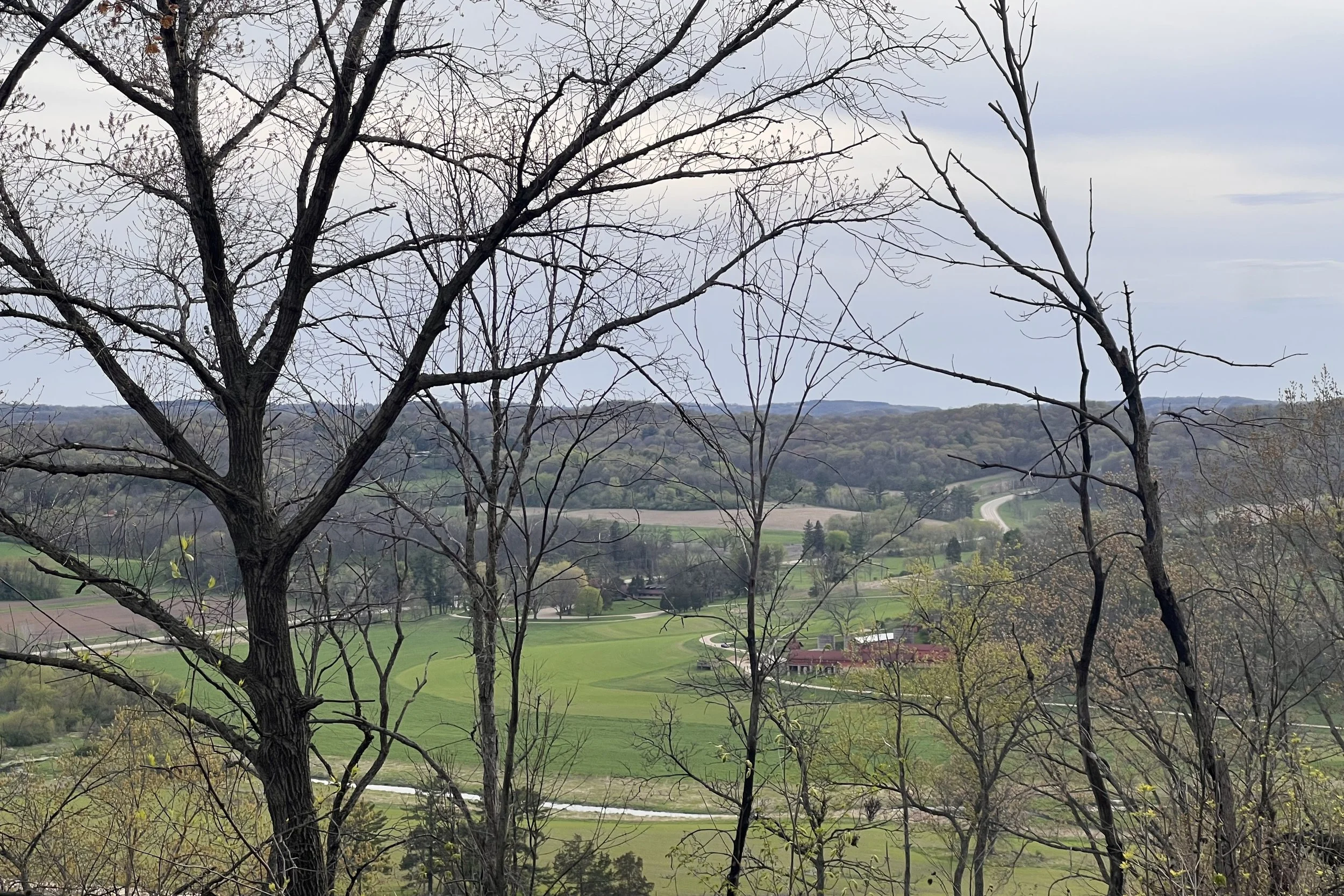
Preservationists, developers, architects, planners, and community leaders gathered at Taliesin on April 28, 2026 for a focused, one-day workshop exploring how historic buildings can help address today’s housing needs. Through case studies, panel discussions, and rapid-fire PechaKucha presentations, participants examined real projects across Wisconsin—from successful adaptive reuse developments to buildings that present challenges and opportunities for housing.
2026 Agenda Overview
Workshop sessions explored financing tools such as historic tax credits, navigating building codes for existing structures, forming effective project teams, and identifying overlooked historic resources that could be repurposed as housing. The program also highlighted strategies for reusing large institutional campuses and activating underused downtown buildings.
Add-on events allowed participants to get a fuller Taliesin experience:
Guided Taliesin Tour — Behind the scenes with the people who know and care for this extraordinary site
Evening Reception at Frank Lloyd Wright’s Home — A rare opportunity to gather in an unforgettable setting with speakers and fellow attendees
Program Booklet
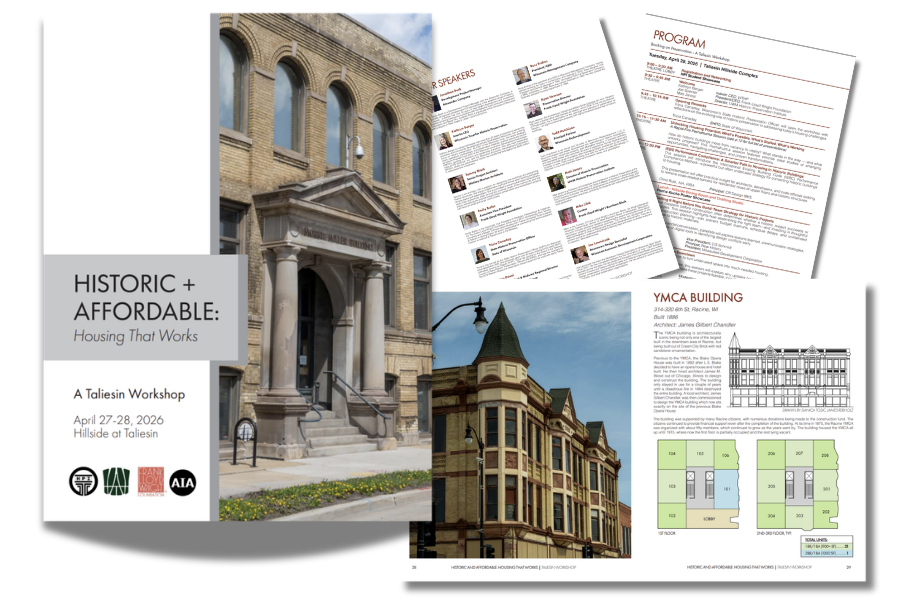
Download the program booklet to explore the full agenda for Historic + Affordable: Housing That Works, including presentations and panel discussions from preservation leaders, architects, and developers focused on the future of adaptive reuse and affordable housing in Wisconsin.
The booklet also features detailed speaker biographies and a compelling collection of student work produced through the UWM Historic Preservation Institute, showcasing drawings, photographs, and adaptive reuse studies created from advanced digital scans of historic buildings across the state.
These projects highlight architecturally significant structures whose historic character and structural configurations make them strong candidates for transformation into affordable housing—demonstrating how preservation, technology, and design can work together to revitalize communities.
Revist Historic + Affordable: Housing that Works
Hillside Theater | Taliesin, Spring Green | April 27-28, 2026

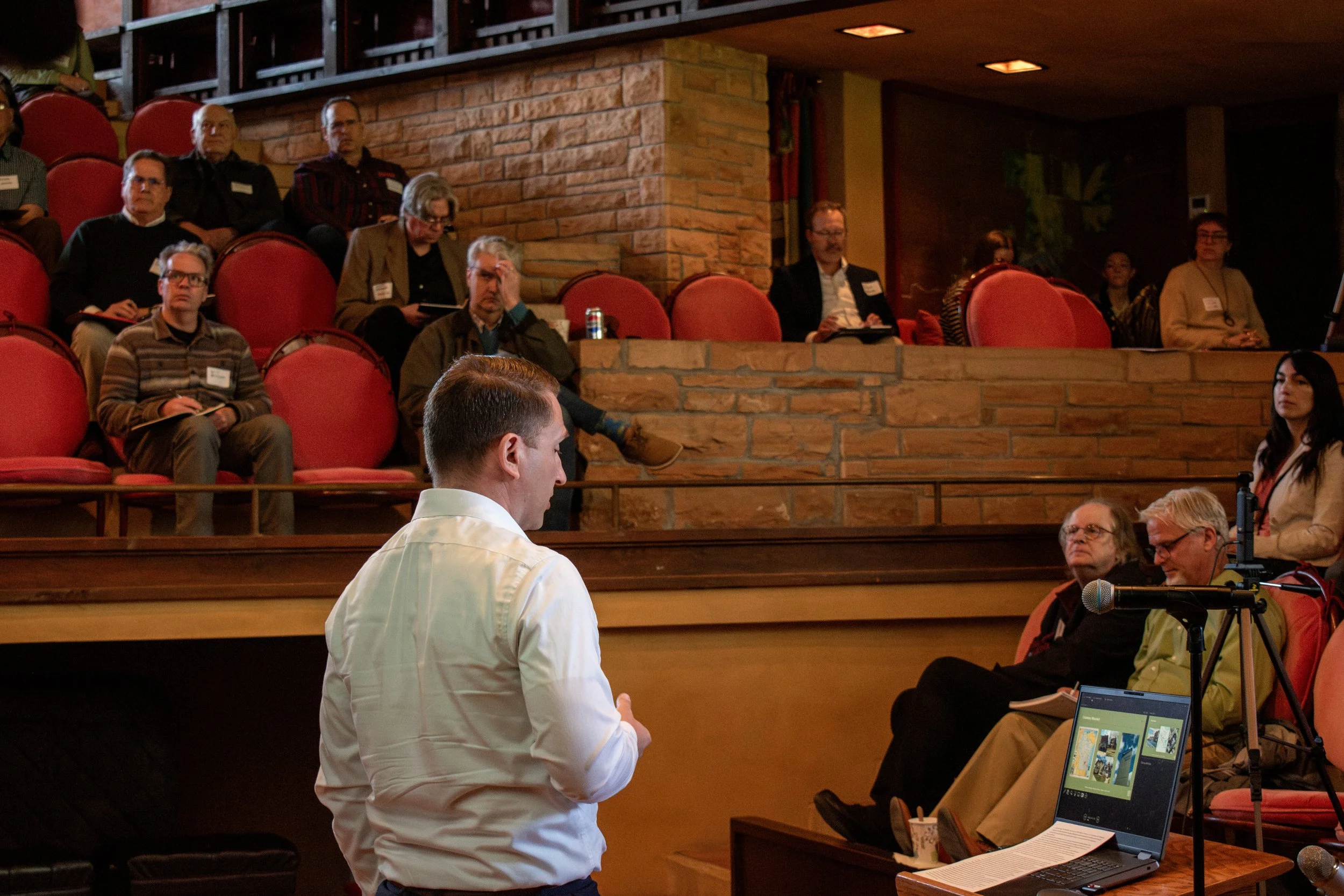
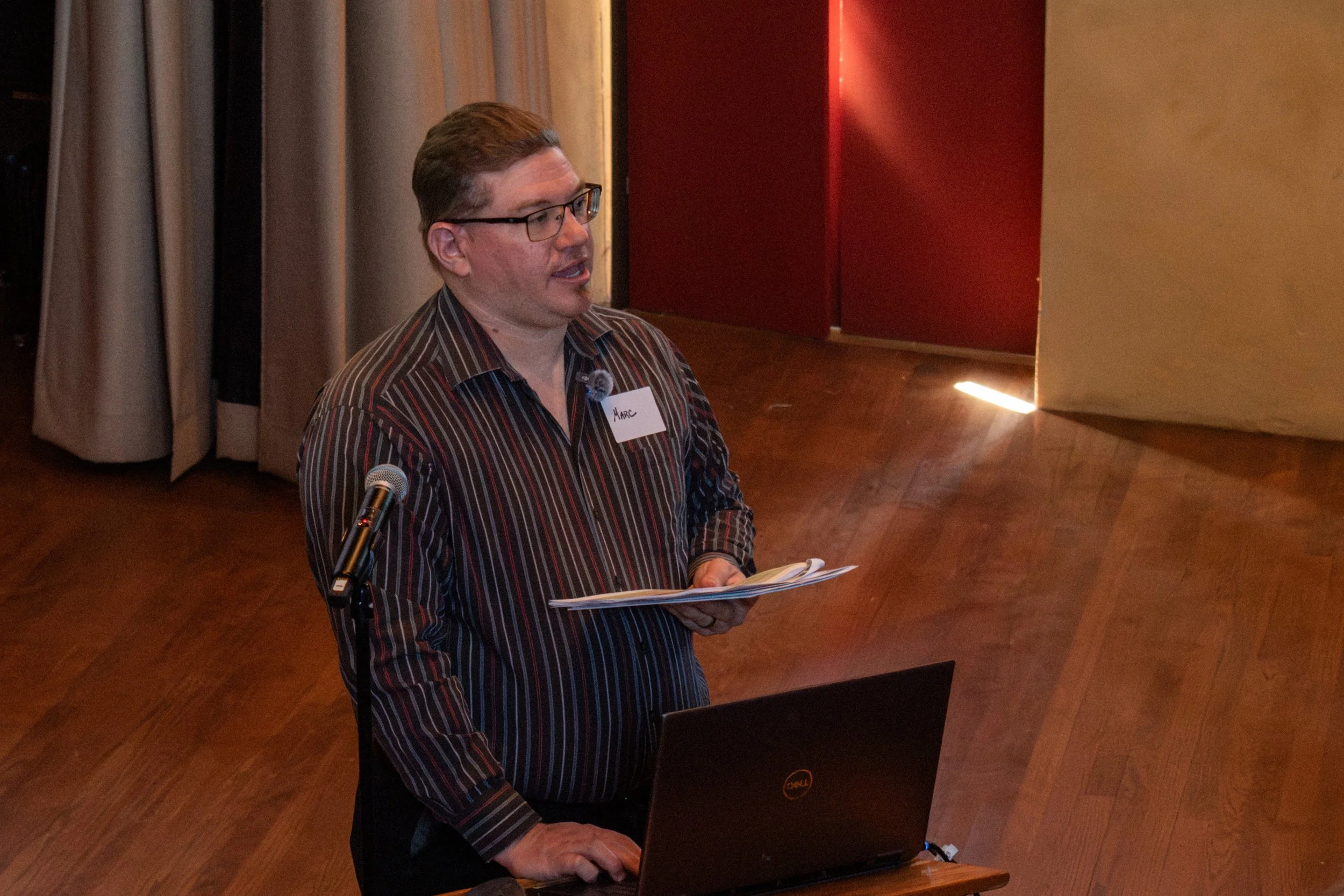
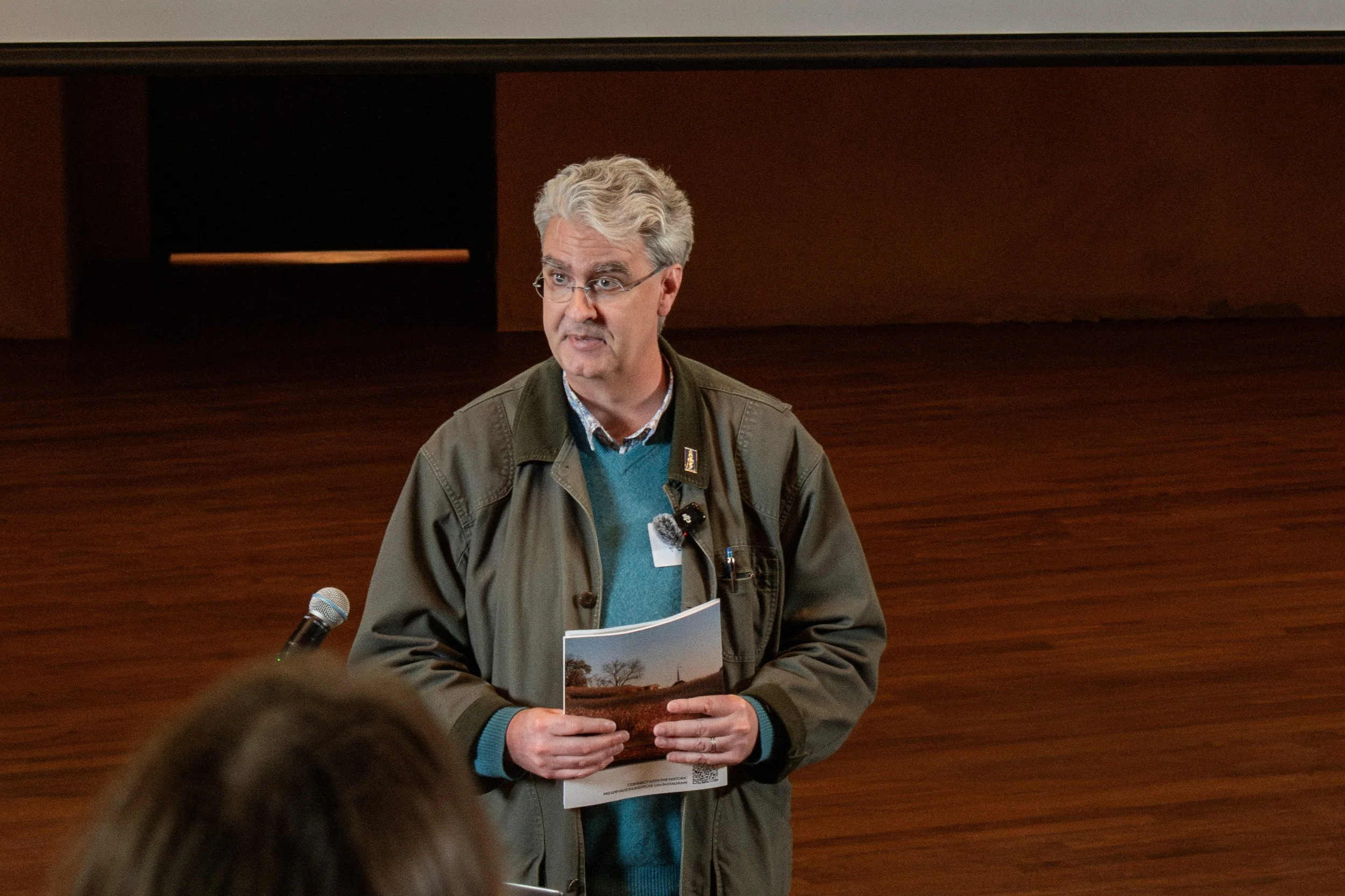
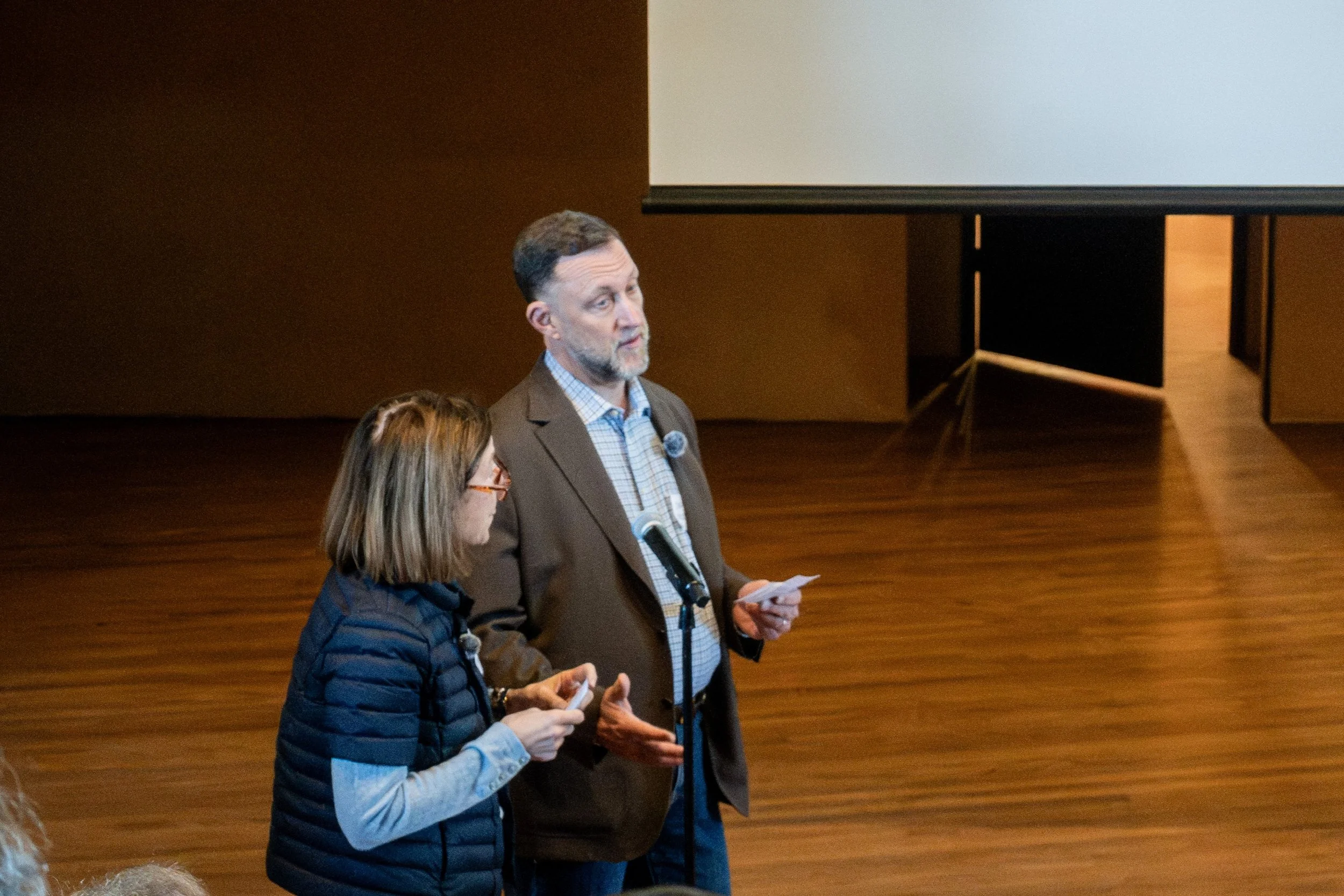
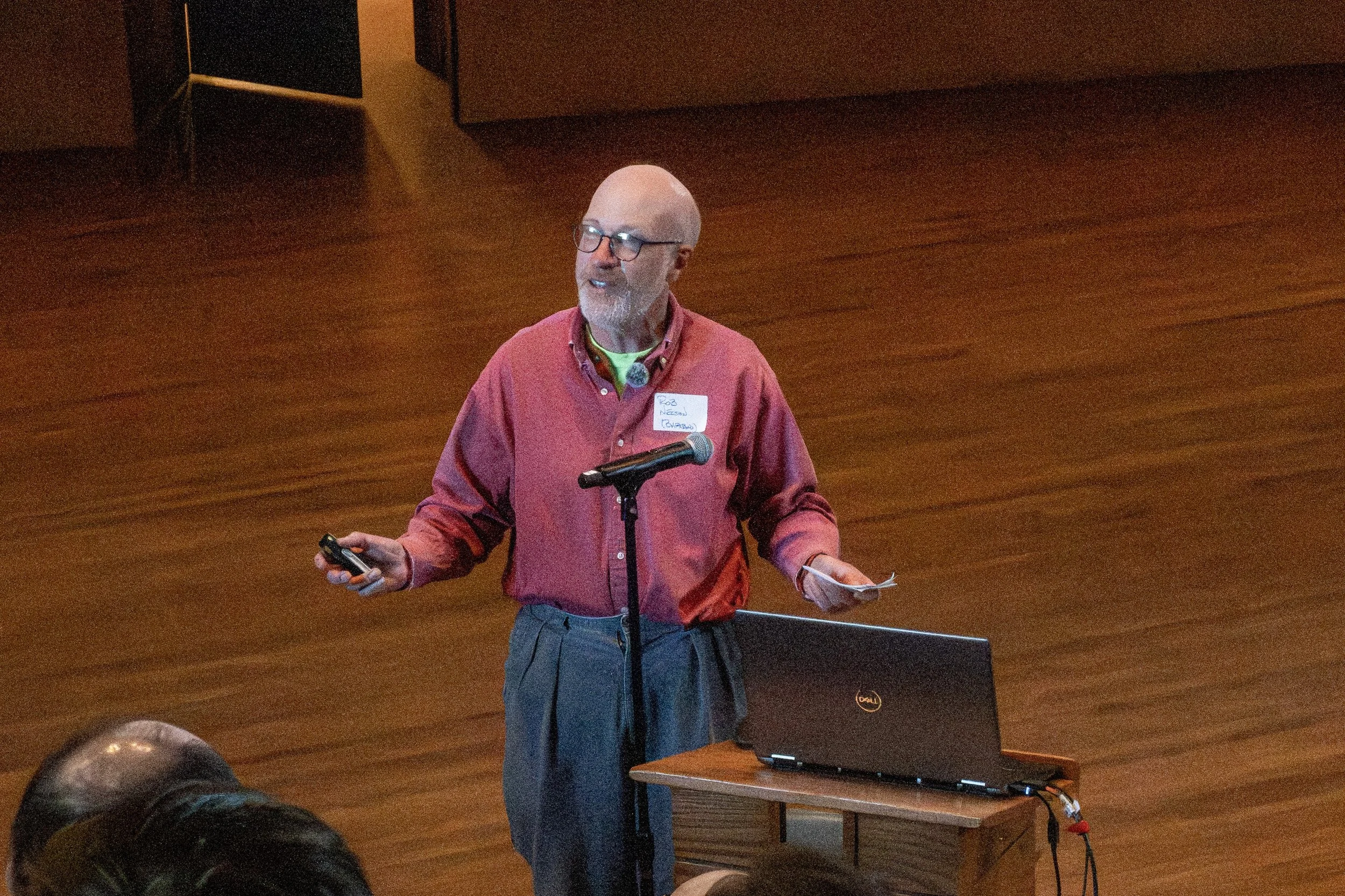
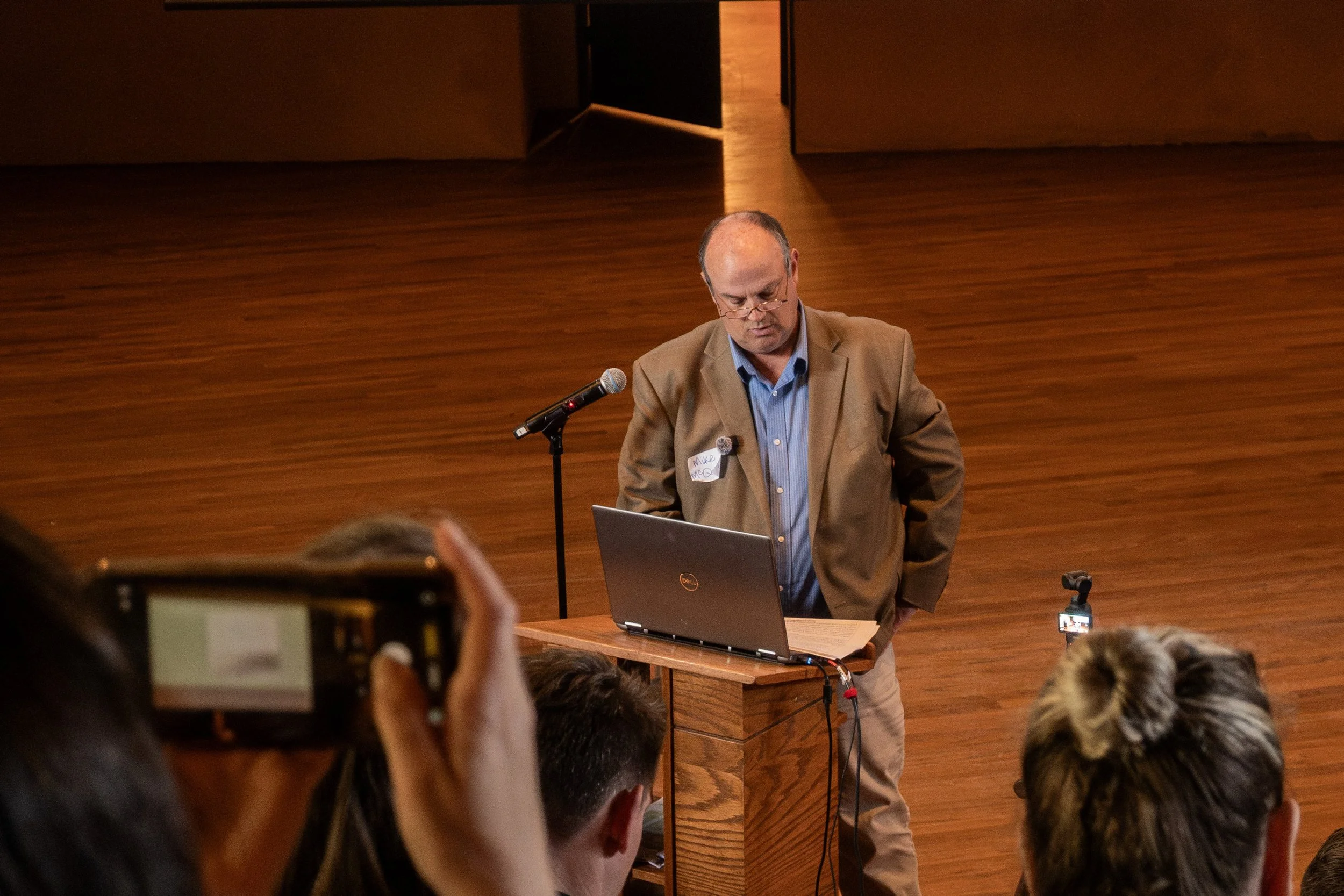
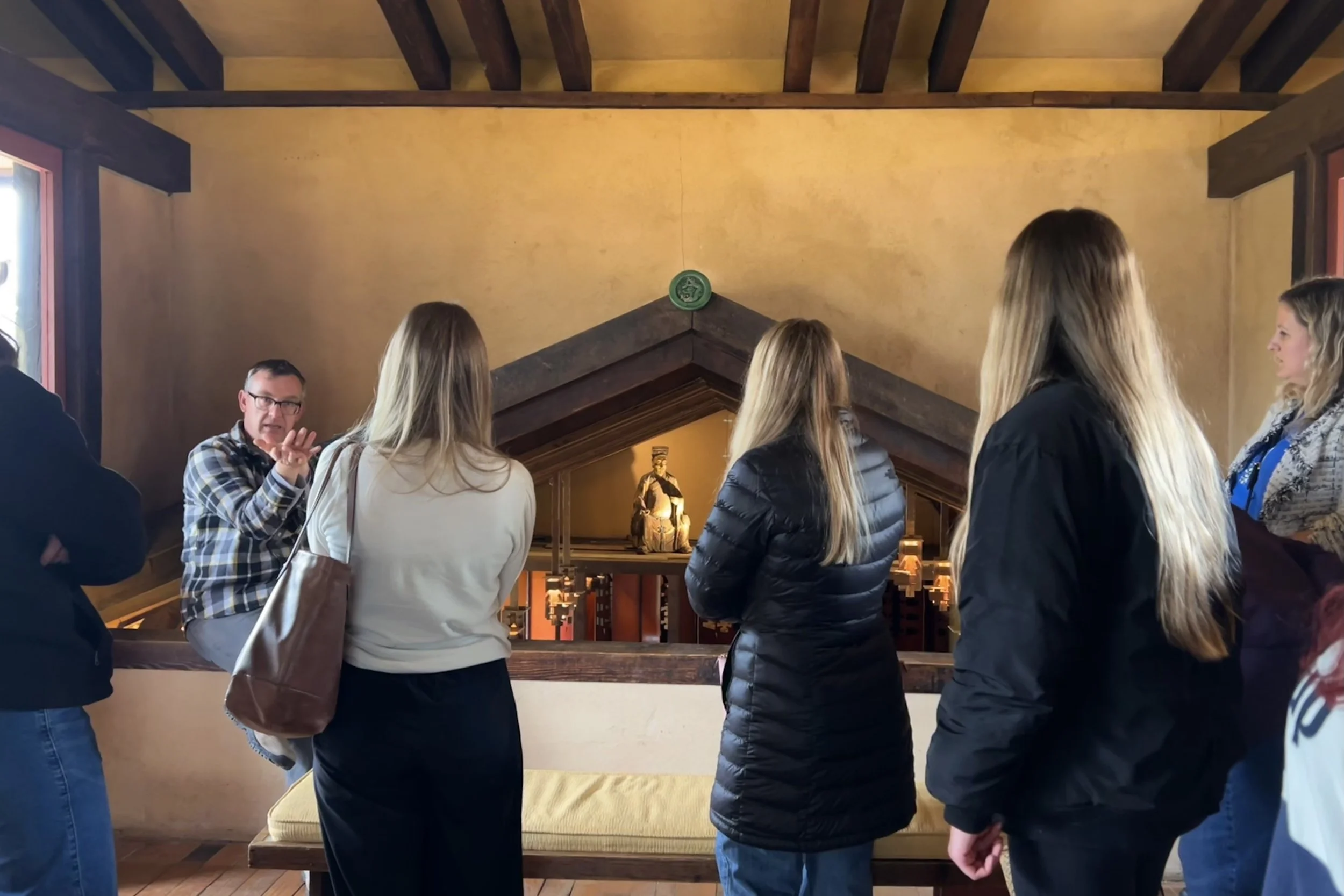
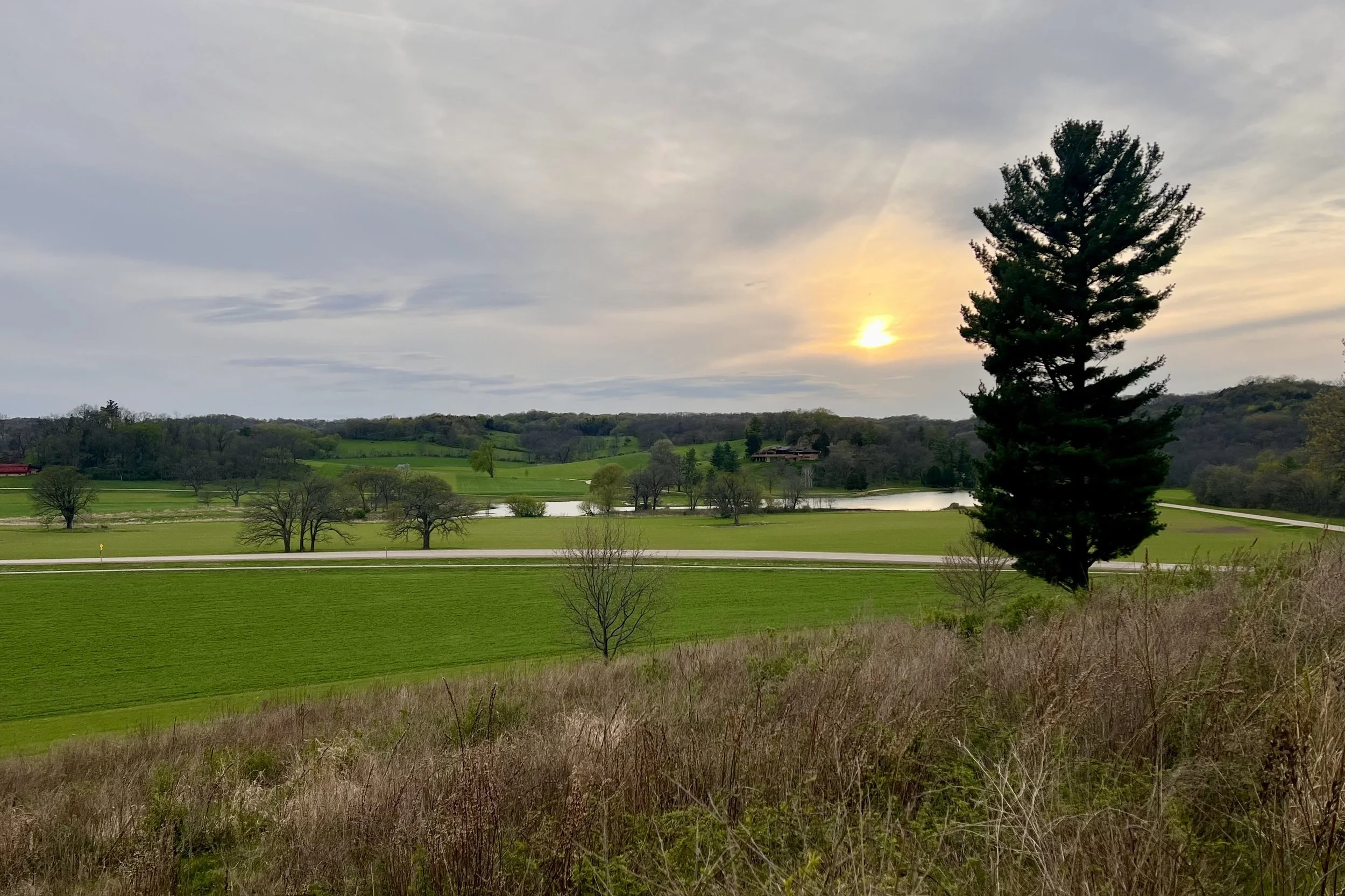
2026 WORKSHOP HIGHLIGHTS
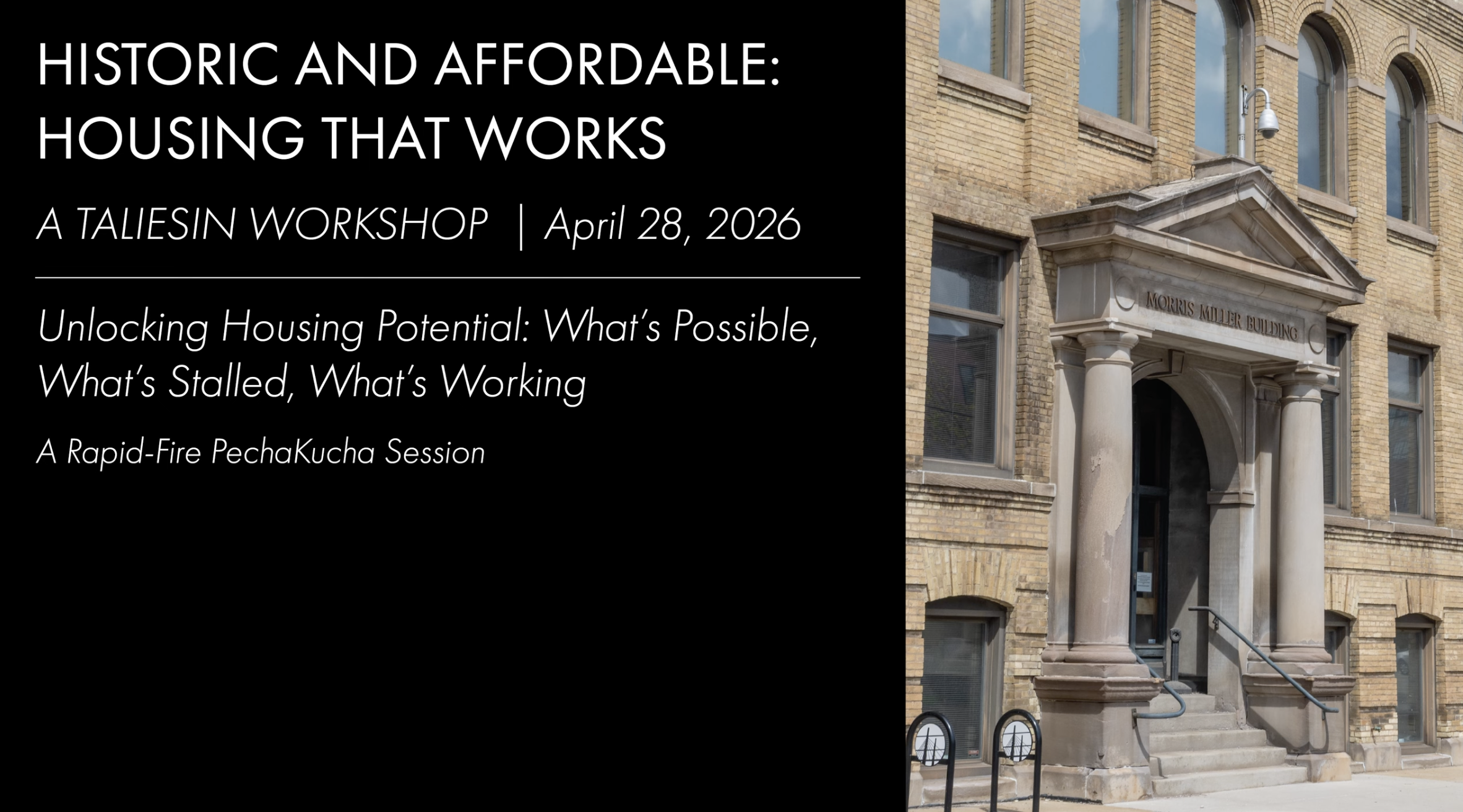
Unlocking Housing Potential: A Rapid-Fire PechaKucha Session
How do historic buildings move from vacancy to vitality? What stands in the way — and what unlocks progress?
Please enjoy this PechaKucha session featuring presentations from multiple speakers on concise case studies of emerging opportunities, navigating challenges, and proven transformations.
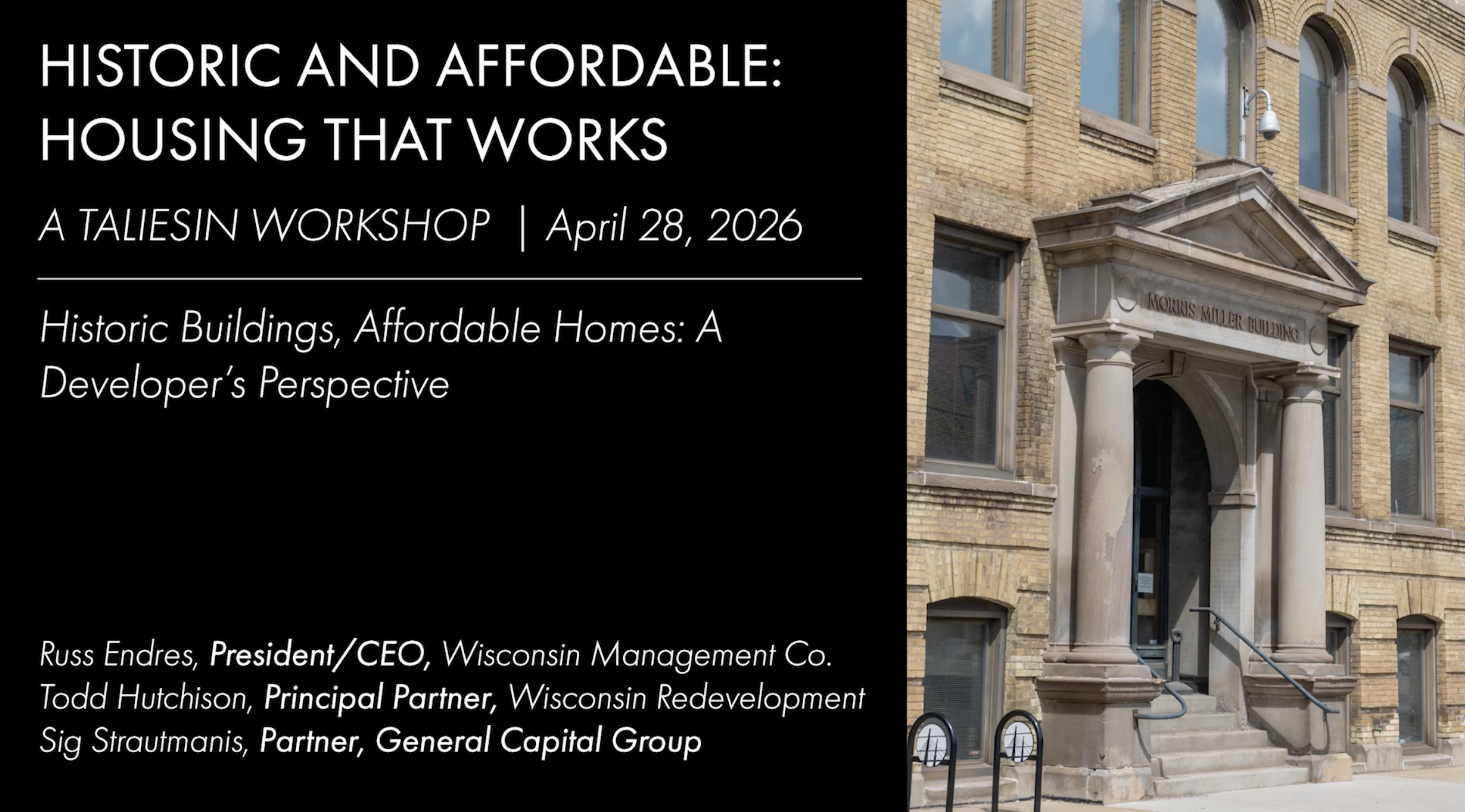
Historic Buildings, Affordable Homes: A Developer's Perspective
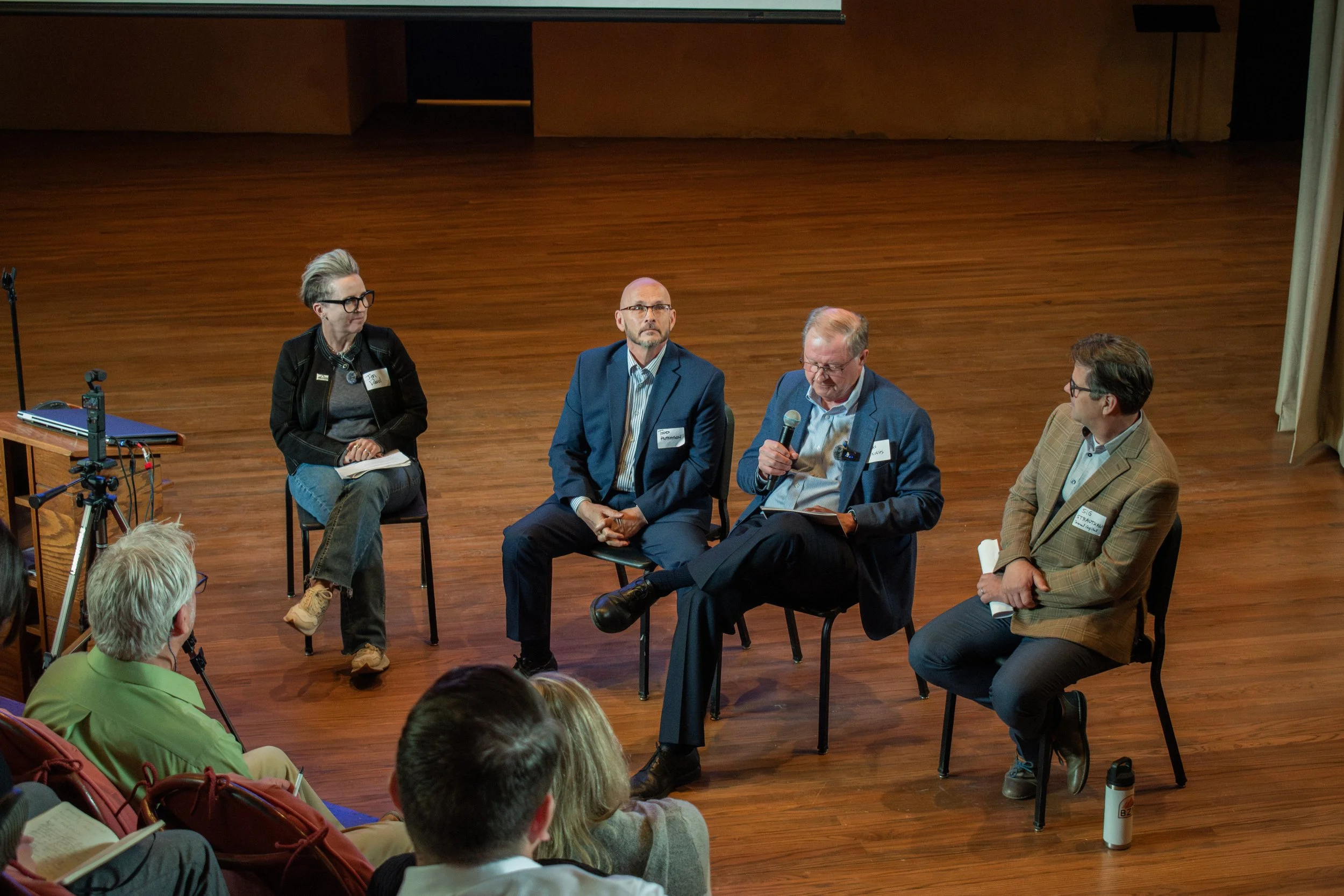
Affordable housing and historic preservation are a powerful combination—but they require the right projects, partnerships, and financing to succeed. Join three experienced Wisconsin developers for a conversation about how historic buildings across the state are being transformed into affordable housing using historic tax credits and other tools.
Russ Endres, President/CEO, Wisconsin Management Co.
Todd Hutchison, Principal Partner, Wisconsin Redevelopment
Sig Strautmanis, Partner, General Capital Group
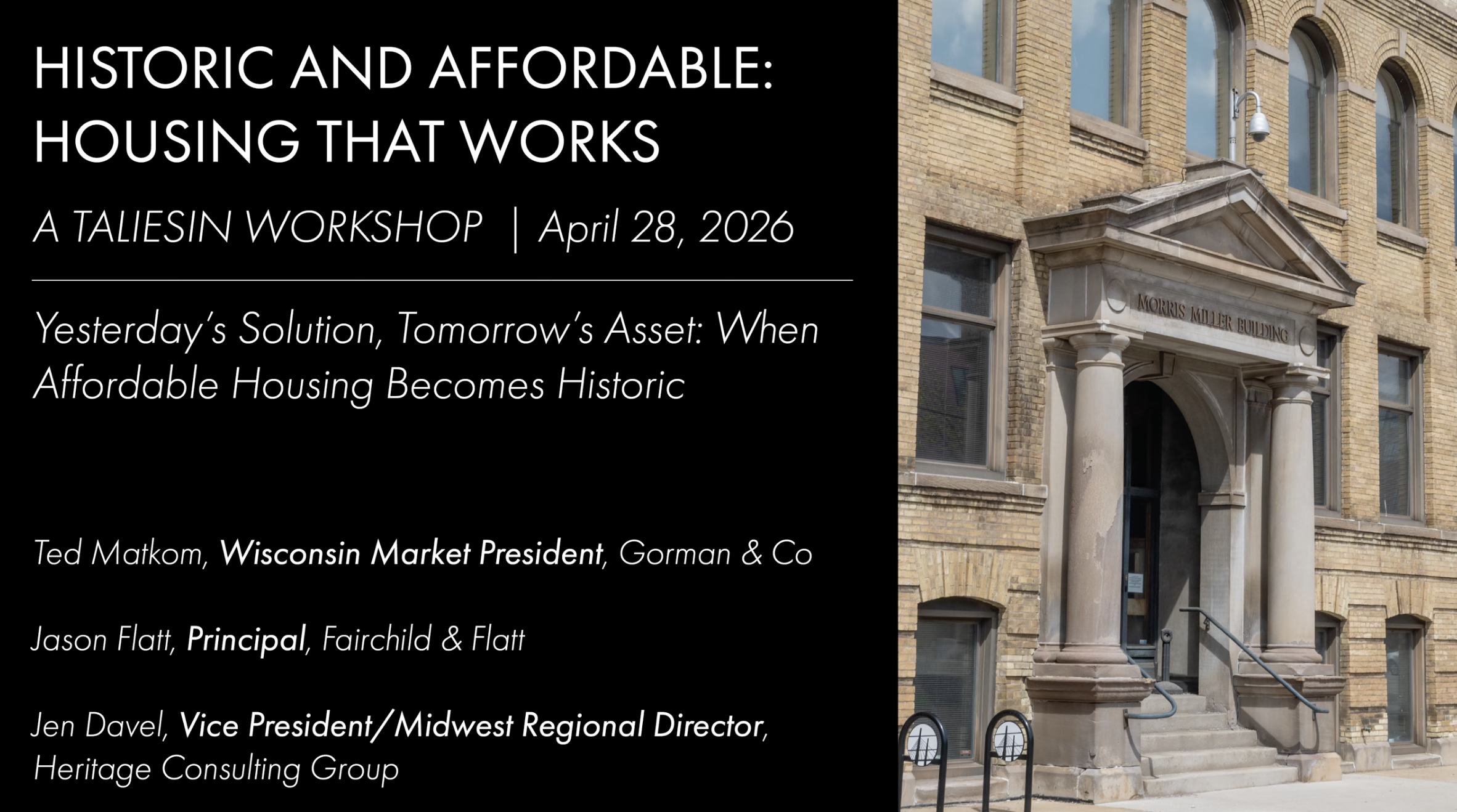
Yesterday's Solution, Tomorrow's Asset: When Affordable Housing Becomes Historic
Purpose-built affordable housing from the mid-20th century is beginning to reach an age where it may qualify for historic designation and historic tax credits. Using Mason Manor in Green Bay as a case study, this session explores how original public housing can be recognized as historic and leveraged for reinvestment.
Ted Matkom, Wisconsin Market President, Gorman & Company
Jason Flatt, Principal, Fairchild & Flatt
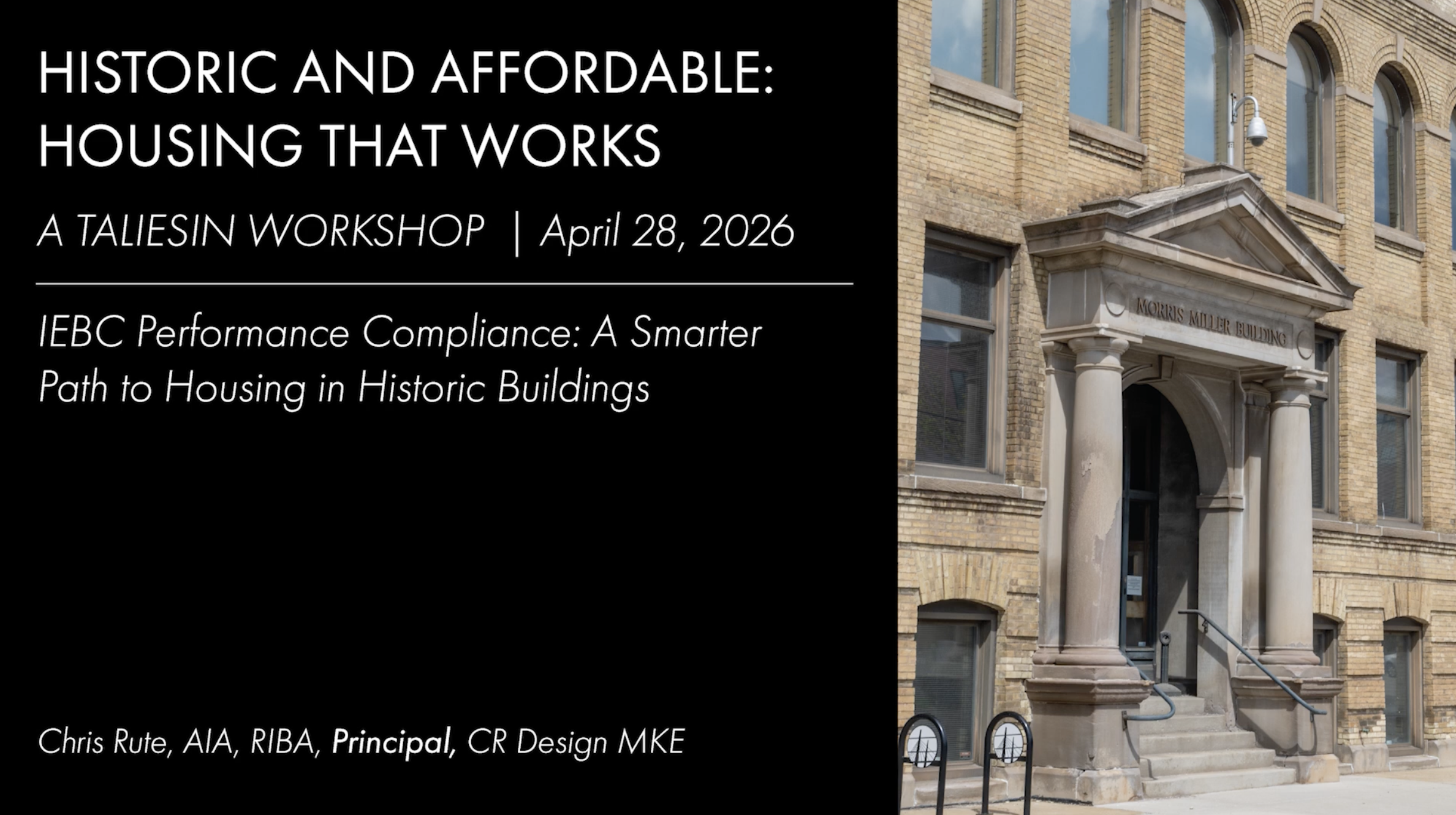
IEBC Performance Compliance: A Smarter Path to Housing in Historic Buildings
This session introduces the International Existing Building Code (IEBC) Performance Compliance Method—a powerful but often underused strategy for converting historic buildings to housing. This presentation will offer practical insight for architects, developers, and code officials looking to remove code-related barriers for residential reuse of upper floors and historic structures.
Chris Rute, AIA, RIBA, Principal, CR Design MKE
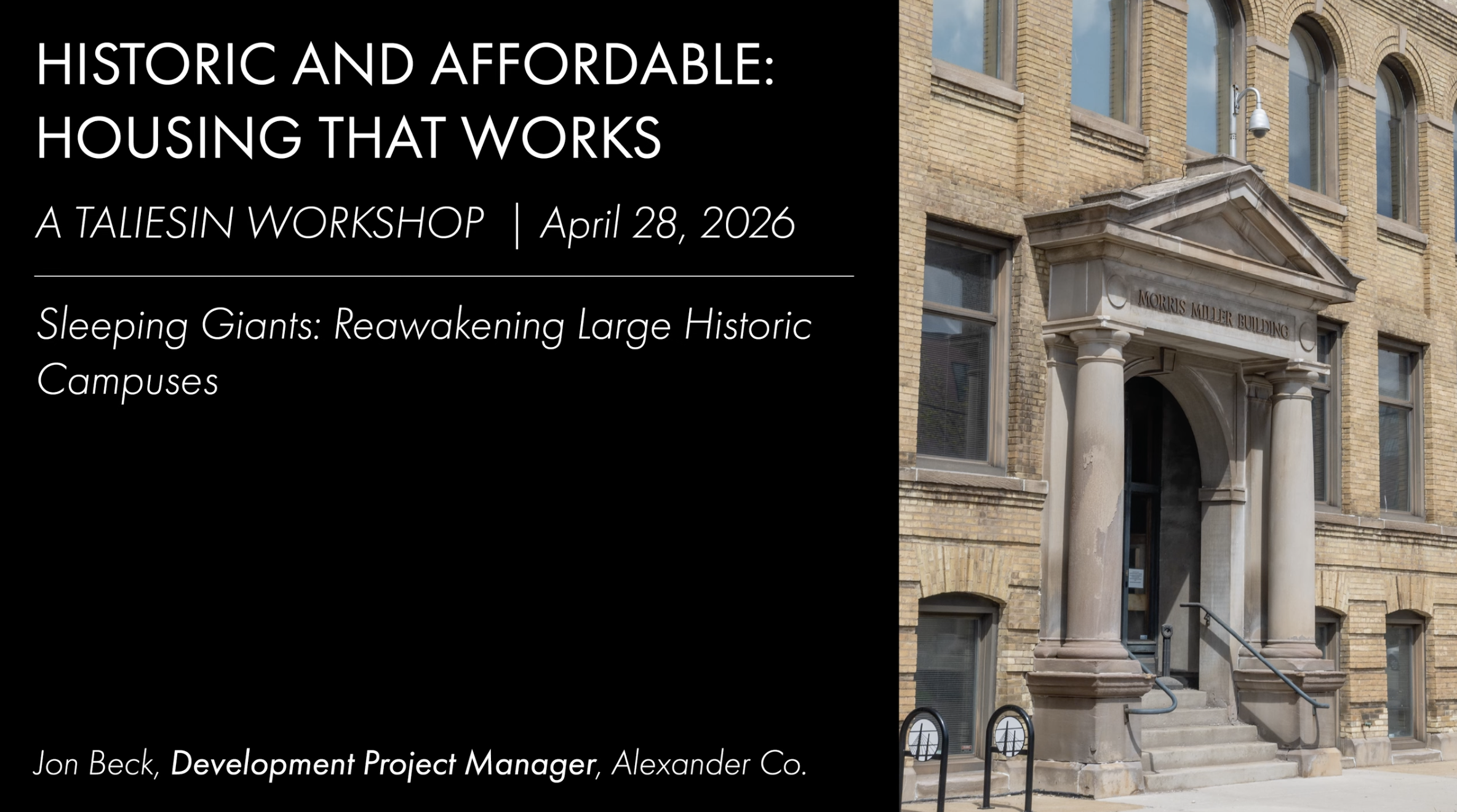
Sleeping Giants: Reawakening Large Historic Campuses
Many communities have them — oversized, aging institutional campuses that feel too big and too complex to tackle. But can they work for housing? Using the historic Milwaukee Soldiers Home as a case study, this session explores how large legacy campuses can be repositioned for housing and complementary uses, how to phase redevelopment, and how to assemble realistic financing strategies for projects at scale.
Jon Beck, Development Project Manager, Alexander Company
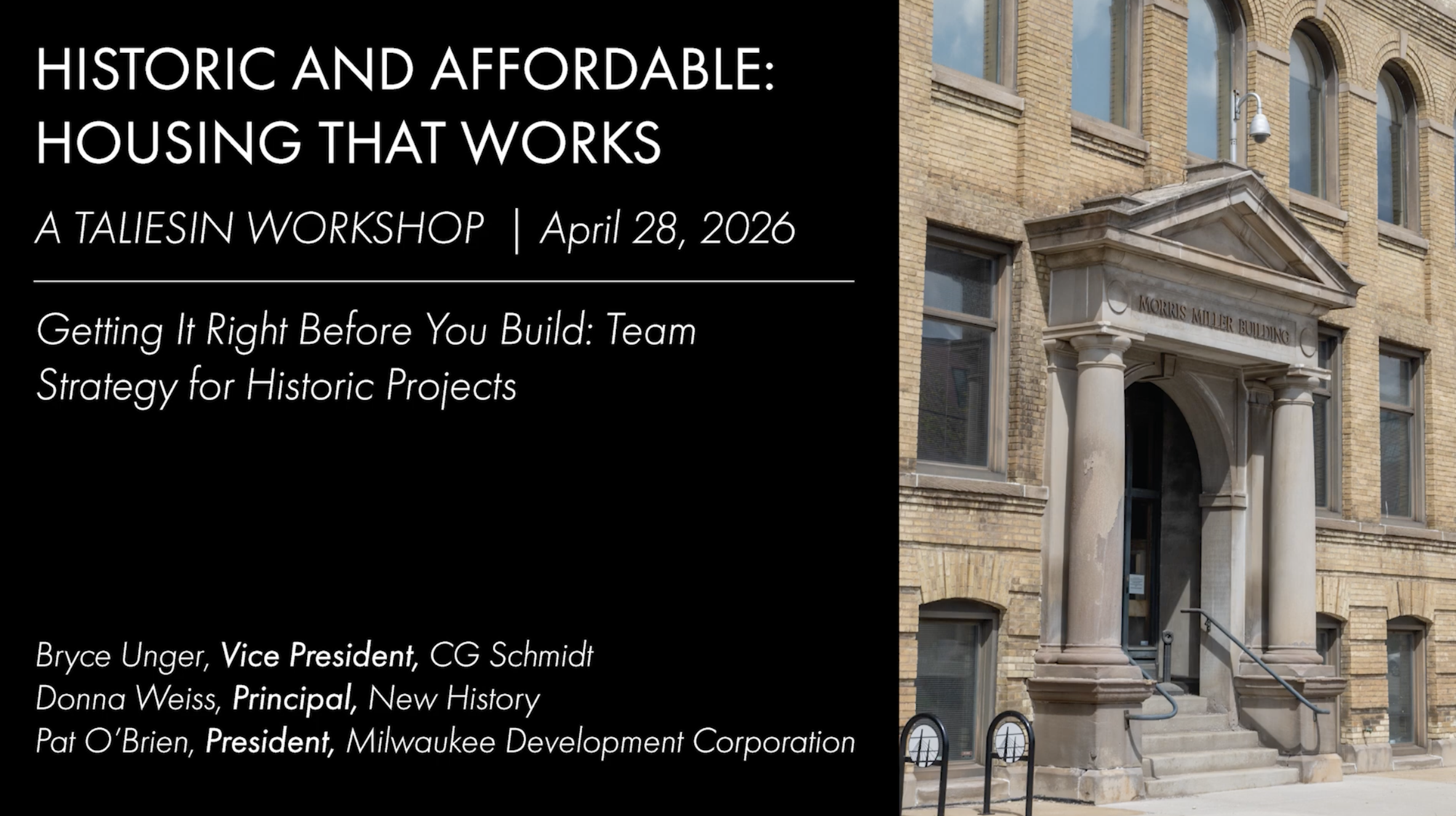
Getting It Right Before You Build: Team Strategy for Historic Projects
What happens before construction often determines whether a historic project succeeds or struggles. This session highlights how assembling the right team—and investing in thoughtful preconstruction planning—can prevent budget overruns, schedule delays, and unintended damage to historic materials. Through candid conversation, panelists will explore lessons learned, communication strategies, and the role of digital tools in identifying design conflicts early.
Bryce Unger, Vice President, CG Schmidt
Donna Weiss, Principal, New History
Pat O'Brien, President, Milwaukee Development Corporation
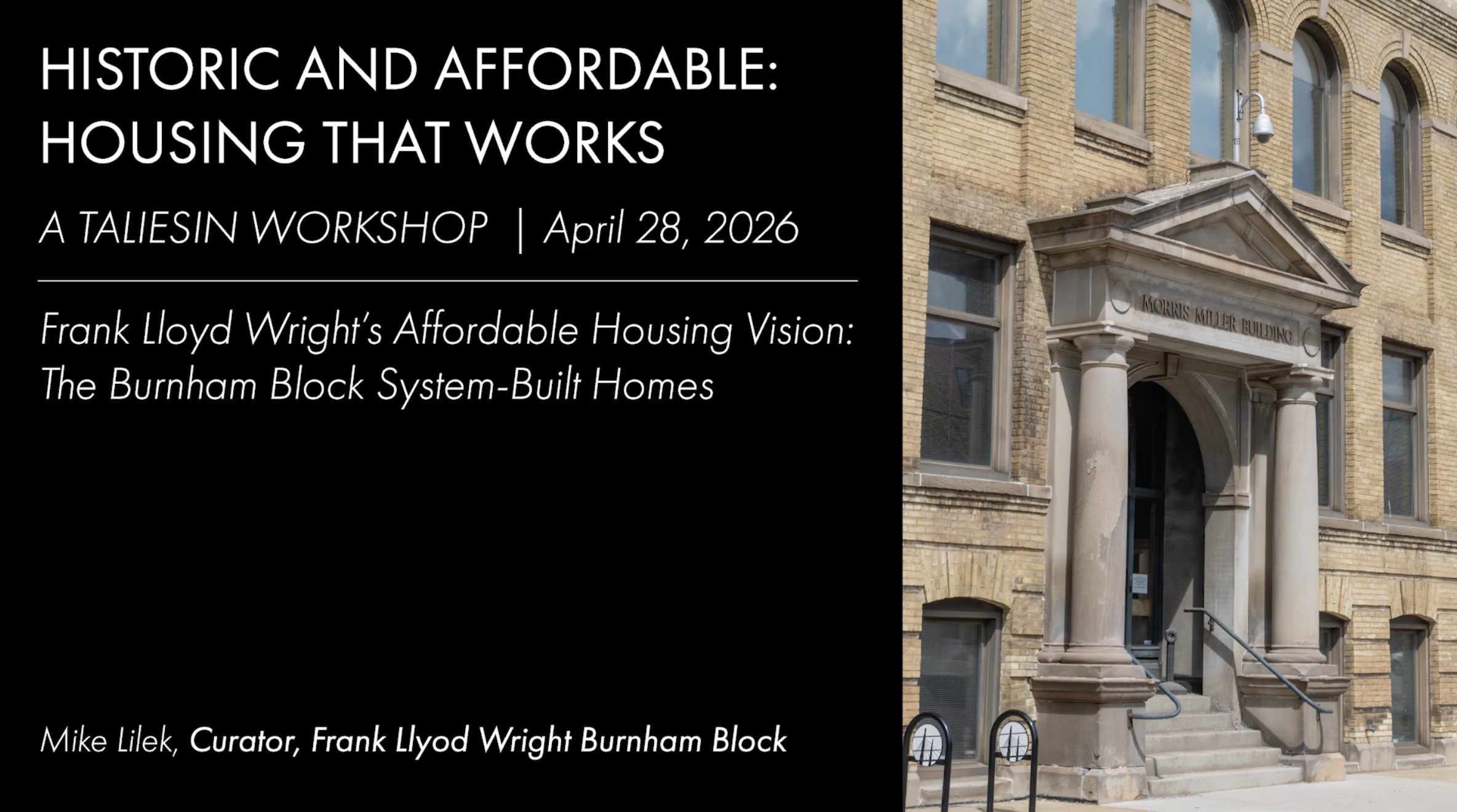
Frank Lloyd Wright's Affordable Housing Vision: The Burnham Block System-Built Homes
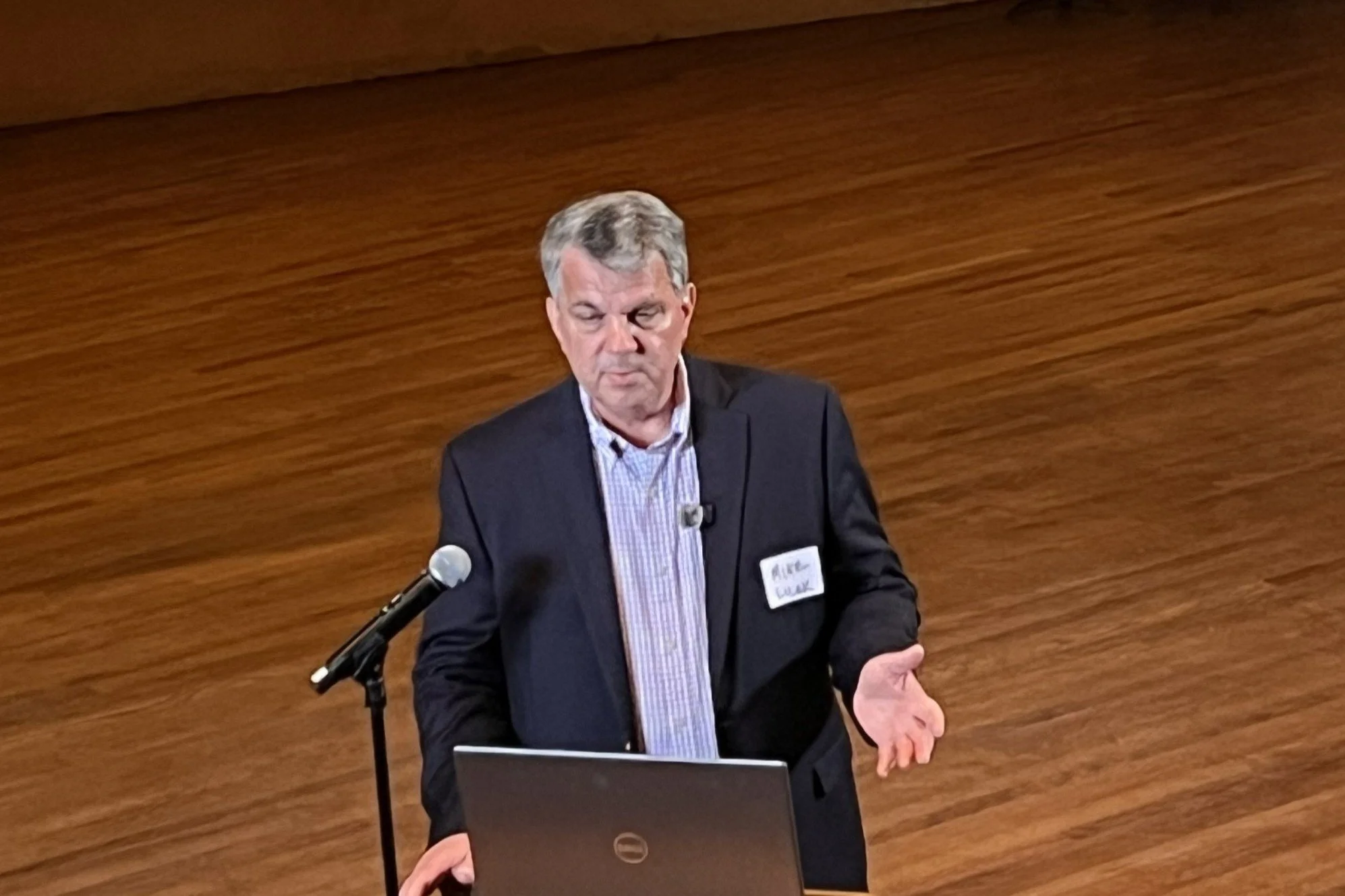
Before “affordable housing” became a common policy goal, Frank Lloyd Wright was already experimenting with ways to design well-crafted homes that ordinary families could afford. This talk explores how Frank Lloyd Wright’s standardized plans, prefabricated components, and efficient layouts from the American System-Built Homes project were intended to lower costs while maintaining architectural integrity. Using the Burnham Block as a case study, we’ll examine Wright’s surprisingly practical approach to affordable housing—and why this experiment still resonates today.
Mike Lilek, Curator, Frank Lloyd Wright Burnham Block