Pharmacy Central: Historic Stone's Building Would Close to Make Way for CVS

The following is republished from TheCityPages.com, a media publication headquartered in Wausau, WI.  If all goes as planned, CVS Caremark will build a pharmacy across the street from Walgreens on Bridge Street in Wausau and go head-to-head with its largest nationwide competitor.

The pharmacy would be built at 102 Bridge St., currently home to stone’s Building Center. Owner Doug Stone has accepted an offer to purchase his 2.68-acre property and if the deal goes through would close the building supply company, which first opened as the Leahy and Beebe’s sawmill in 1883. The site still is home to the older intact remnant from Wausau’s lumbering days.

“With the housing economy the way it is, it’s the best thing I can come up with right now,” Stone says. “I would love to have stayed and had it been successful…It’s better for us to have found someone who can use the property and continue to make it an asset to the city as opposed to us staying here and having to leave the thing empty and ugly.”

Changing Zones

The Wausau Plan Commission on July 17 voted 5-0 to approve a request by a CVS representative to change the property’s zoning from light industrial to commercial. The city Council will consider the request August 13 and if approved, the company can move forward with its plans.

CVS, headquartered in Rhode Island, owns 7,300 pharmacies nationwide, including 40 in Wisconsin.

As of June, Walgreens operated 7,907 drugstores nationwide, including 225 in Wisconsin. Based on revenues, CVS is ranked the 18th largest American-based corporation by Fortune Magazine and Walgreens No. 32.

Pharmacies Around the State

Walgreens operates three pharmacies in the Wausau area, including the recently opened drugstore at 17th and Stewart avenues. There are numerous other pharmacies in the community, some locally owned, including Young’s Hometown Pharmacy located across the ricer at 310 E. Bridge St.

It boils down to high traffic counts, city planner Brad Lenz says, in an effort to partly explain why a third pharmacy would open within five blocks of two others.

“Bridge street is the last crossing of the river – it takes a huge amount of traffic,” he says.

CVS Listening

To CVS’s credit, Lenz says the company is at least listening to suggestions that some element of the site’s historic structure be salvaged or incorporated into the new facility. Historian Gary Gisselman, also a city alderman told the Plan Commission July 17 that the sawmill, which in its heydey extended to the river bank where Graphic Packaging now is located, also was the site of the city’s first electric plant. The five-light dynamo machine” powered the mill and the remaining electricity was sold off to the city. The power plant was located inside a brick building, which still rests just north of the Stone’s Building office and showroom build in 1986.

Stone bought the company form his father in 1999.

He says his great grandfather Fowler P. Stone was a banker for the original sawmill, which became the Jacob Mortensen Lumber Co. and then the Mortensen & Stone Lumber Co. Part of an original planning machine still hangs from a ceiling in a brick building adjacent to Stone’s current offices and showroom.

“That is one of the pure remnants left from one of our early days,” Gisselman says. “This is an important part of our Wausau history. The ultimate would be to retain the building.”

Opportunity Costs

Because it’s located within the city’s new tax increment finance district, Lenz says the city could choose to use some of the new tax revenue generated by the CVS development to help cover costs to retain some of the site’s historical significance.

“We’re not trying to be adversarial and get in the way, but hopefully we can come up with something advantageous to both preserve our unique history and come up with something to benefit them, too,” Lenz says.

CVS representatives didn’t return phone calls seeking comment for this report. Lenz says the developer for CVS has not shared when the company intends to open the new pharmacy.

Wisconsin’s Historic Post Offices

Recently, the National Trust for Historic Preservation unveiled its annual list of “11 Most Endangered Places.” This diverse list highlights threatened historic resources located throughout the United States. One entry in particular, Historic Post Office Buildings, caught my attention.

It is no secret that the U.S. Postal Service has faced many challenges in recent years. In order to cut costs, the USPS proposed closing around 4,000 post offices nationwide, including many in Wisconsin. The prospect of closures, coupled with deferred maintenance on many functioning post offices, leaves many of these neighborhood mainstays facing an uncertain future. (Visit SaveThePostOffice.com for more information.)

According to the National Trust for Historic Preservation’s website:

Local post office buildings have traditionally played an essential role in the lives of millions of Americans. Many are architecturally distinctive, prominently located, and cherished as civic icons in communities across the country. Unless the U.S. Postal Service establishes a clear, consistent process that follows federal preservation law when considering disposal of these buildings, a significant part of the nation’s architectural heritage will be at risk.

Please consider nominating a threatened post office in your community to the Wisconsin Trust for Historic Preservation’s 2012 “Ten Places to Save List.” More information about the program, including a link to the nomination form, can be found on the Wisconsin Trust’s website www.wipreservation.org.

Eschweiler Update: Developer Stands By Stance to Raze Historic Buildings

The debate around the Eschweiler Buildings has waged back and forth for the past few months with the latest stance coming from Barry Mandel, the site's developer. Mandel believes razing the historic buidlings are the only workable course of action for the property. An excerpt from Jim Price's Patch.com article has more of the story:

After a month of pondering alternatives, Barry Mandel, who wants to buy and redevelop the Eschweiler Campus on the County Grounds, repeated Wednesday that he would need to demolish three out of four historic buildings for his plan to work.

But preservationists were out in force to condemn any course that failed to preserve the buildings as a group, which they said has always been Wauwatosa's intention and official position.

Mandel, president of Mandel Group, with lead staff and consultants, made a second presentation Wednesday night to the Wauwatosa Historic Preservation Commission, after first coming to the panel on May 3. No formal proposal was made then or now, and no action was contemplated by the commission, but the message was strong.

For more, please see Patch.com

State Official: County Violated State Law In Selling Eschweiler Buildings

Here's an update on the Eschweiler Buildings for those following along with our posts. It seems that Milwaukee County acted improperly in the original sale of the Eschweiler buildings to the UWM Real Estate Foundation.  The attorney for the WI Historical Society,  Chip Brown, is now involved and has forwarded the issue to the Attorney General.  The following is an excerpt from Fox 6 West Allis' coverage of the story. Click the link at the end of the clip for the complete story.

A legal specialist for the Wisconsin Historical Society has notified the Attorney General's Office that he believes that the sale of the Eschweiler Campus Historic District by Milwaukee County to the UWM Real Estate Foundation violated state law.

He went on to say because of that, Wauwatosa should deny any request to demolish any of the Eschweiler buildings — and that in one scenario, the violations could result in as drastic an action as vacating the original land sale.

Chip Brown, an attorney and government assistance and training specialist, said the county failed to notify the state Historical Society of the sale of the historic property and failed to obtain a conservation easement to protect it.

Visit Wauwatosa Patch for more...

Help Save the Wauwatosa Eschweiler Buildings

URGENT – Please plan to attend the May 3, 2012 Wauwatosa Historic PreservationCommission meeting! The project developer may present a proposal to demolish four of the 1912 buildings. We need people on-hand to defend these architecturally and historically significant buildings and support their re-use as part of the site’s overall development plan.

The Tudor Revival Style buildings were designed by Alexander Eschweiler for the Milwaukee County School of Agriculture and Domestic Economy. All of the remaining buildings are listed on the National Register of Historic Places.

AGENDA WAUWATOSA HISTORIC PRESERVATION COMMISSION MAY 3, 2012

7:00 p.m.

COMMITTEE ROOM #2 Wauwatosa City Hall 7725 W. North Ave.

  • New Business

  • Approval of meeting minutes

  • Eschweiler Buildings Redevelopment Update – Initial discussion of proposed plans

Eschweillertwo.jpg

Historic Preservation Awards | Nomination Form

The Wisconsin Historical Society invites nominations of exemplary projects that have restored or preserved a part of the Wisconsin's historical, architectural, archaeological or cultural heritage. Two awards will be given each year, one for historic restoration and one for historic preservation.

Eligibility

  • Property must be in Wisconsin

  • Nominated work must have been done in the last two years and must be completed

  • Property must be listed on or be determined eligible for the State Register of Historic Places or be listed in a certified municipal register of historic properties

Please complete the form below or download this PDF and mail to the address at the bottom of this page.

Please attach the following and email to info@wipreservation.org.

  1. Description of the project in 500 words or less. Describe any special restoration or preservation techniques, research or difficult problems that were overcome. If property was threatened, identify  the type and degree of the threat to the property. Note any special efforts or plans to ensure the future protection of the property. [formbuilder:2]

  2. Please email four to ten color slides or digital images showing the historic property before and after the project was completed to info@wipreservation.org. Digital images must be at least 300dpi and 480X600 pixels. No materials will be returned and we reserve the right to use the images in publications, web sites and databases.

  3. Copies of historic photographs of property if available can also be emailed to info@wipreservation.org. Please site the source of the photographs. If the property is not listed on the State or National Register, attach documentation showing property was determined eligible for listing on the Registers by the Wisconsin Historical Society, or that the property is listed on a certified municipal register.

  4. If neither of these is the case, but you believe the property is eligible for listing on the State or National Register, please complete and attach a National Register Questionnaire (available here).

  5. Other documentation, such as magazine or newspaper clippings, photographs or brochures that support or explain the achievements of the nominee.

Nomination form and supporting material can be mailed to:

Historic Preservation and Restoration Awards Committee Division of Historic Preservation - Public History Wisconsin Historical Society, 816 State St. Madison, WI 53706

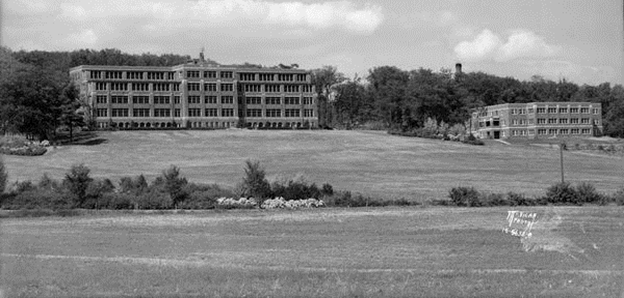
The Nurses Dormitory at Lake View Sanatorium

Lake View Hill Park was established as a Dane County park in 2004 in an attempt to conserve the significant natural and cultural resources associated with the former Lake View Sanatorium. Lake View Sanatorium operated as a tuberculosis sanatorium from 1930 until 1966 in Madison, Wisconsin.

Sanatorium1.png

As part of the Wisconsin county system of sanatoria, Lake View played an important role in providing education, diagnosis, treatment, and rehabilitation for TB patients in Dane County. When planning for the institution, a great amount of attention was given to the selection of the site, and the beauty of the setting and grounds. The medical approach to treating tuberculosis included extensive bed rest, exposure to fresh air and sunshine, and a diet consisting of plenty of meat, fresh fruits, vegetables, and dairy products. The emphasis on fresh air and sunshine meant that the buildings, site design, and surrounding landscape were considered vital factors in the recovery of patients.

pic-2.png

Throughout the country, practitioners applied a similar approach in developing facilities for the treatment of TB, emphasizing the location and design of sanatoria to maximize exposure to outdoors. The effect of tuberculosis on our society has been dramatic, and yet most of us know very little about it. The story is tangible at Lake View.

Adaptive Use & Efforts of Preservation

Although the Sanatorium closed in 1966, the majority of the buildings and landscape have continued to be owned and used by Dane County. Adaptive use of the landscape as a county park and ecological restoration area has been successful. Continued use of the buildings by the Dane County Department of Health and Human Services has preserved them on site and provided pleasant office space.

pic-3.png

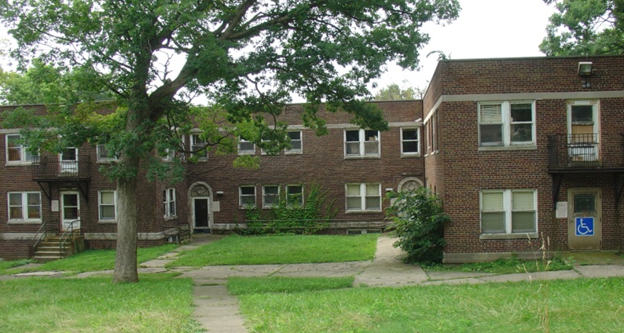
Unfortunately, the Nurses Dormitory is the exception to this story. In 1984 the county ceased active use of the 20,000 square foot historic dormitory at the property. Since that time, the building has been used for storage. Maintenance has been minimal, and the roof is currently leaking.

Efforts to determine a feasible use of the building, by the county, have been unsuccessful. The county has budgeted funds for demolition of the building in the current fiscal year. In an effort to preserve this important part of the historic landscape at Lake View, the Friends of Lake View Hill Park have sought to find a partner to develop the building for a use that is compatible with the surrounding neighborhood, park, and current use.

You can learn more at:

pic-4.png

Finding Common Ground

A Wauwatosa-based coalition, dedicated to preserving a delicate natural ecosystem, has aligned itself with the Wisconsin Trust for Historic Preservation in an effort to preserve a portion of the Milwaukee County Grounds that once was home to the Milwaukee County School of Agriculture and Domestic Economy. The building group was designed by Andrew C. Eschweiler, a prominent Milwaukee architect who began his practice in 1890. The school opened in 1912 and provided free agricultural training to students from Milwaukee County. As the City of Milwaukee grew over the next two decades and the county's rural population decreased, enrollments dropped and the cost of running the school became prohibitive. It closed its doors in 1928. The buildings functioned in different capacities over the next many years, including its operation as the Milwaukee County Children's Home in the 1940s; the site has been nearly abandoned for over a decade.

Limited use of the property has contributed to it supporting a biodiversity of plant and animal life, including (most importantly) it being a significant migratory pathway for the monarch butterfly. Its location near the convergence of rivers and its elevation make the site a irreplaceable treasure for Milwaukee County and the State of Wisconsin.

The coalition, comprised of concerned environmental groups, prepared its "County Grounds Preservation Proposal," which promotes the rehabilitation of the Eschweiler buildings and their ongoing low-impact use as part of its over-riding objective of preserving the landscape. The WTHP is proud of its association with the coalition and believes that there is much common ground to be shared with those dedicated to raising environmental awareness. We all are committed to preserving the places that matter.

The "New" Wisconsin Trust

7.jpg

While we are busy planning events to bring together former members with a new generation of Wisconsin citizens concerned with historic preservation, we need to keep a focus on what unites us. While there have been gigantic leaps in the methodology of historic preservation over the past decades, the landscape has changed markedly. With more groups competing for scarcer resources, we have come to rely increasingly on the private sector to revitalize our historic buildings and neighborhoods. While study upon study has shown that historic preservation makes economic sense, that is not enough of a catalyst to motivate developers to rehabilitate the old in favor of building new.

Historic preservation is inextricably tied to environmental sustainability, which is becoming an increasingly widespread core value in our society. As advocates for historic preservation, we need to work to achieve a similar status for our cause. We must make the retention and rehabilitation of our significant historic structures and sites the norm, rather than the result of a series of hard-fought battles.

While the Trust plans to work with communities across the state to save the places that matter to all of us, the ultimate goal of the "New" Trust is that historic preservation become more of a commonplace standard in the ongoing development of our communities.

A Tribute to UW Professor Emerita Jane N. Graff

6.jpg

Jane N. Graff's life's work had been to provide program support to UW Extension Faculty as a professor in the Department of Related Art within the University of Wisconsin School of Home Economics (currently known as the School of Human Ecology). She worked in this capacity for 32 years, following which she received professor emerita status.

Beginning her career with the University in 1959, Professor Graff lived "the Wisconsin Idea" through her to outreach to Wisconsin families by way of newsletters, radio, television and other media. Her principal focus was the home environment and its impact on the Wisconsin family. By the 1970s her passion for textiles led to her work with 4-H groups in textile design and fueled her research into historic quilts. She was deeply involved with the Helen Louise Allen Textile Collection in the School of Human Ecology. In fact, her commitment to the collection is reflected in her endowment of a position for a research assistant to work with the materials.

Professor Graff passed away on August 7, 2008 at the age of 81. In death, she demonstrated the same generosity that characterized her life. Her generous bequest to the Wisconsin Trust for Historic Preservation, Inc. has been the central impetus behind the current revitalization of the organization. As we carry the mission of the Wisconsin Trust forward, Professor Graff always will remain an inspiration for her dedication and generosity.

Photograph of Professor Jane Graff (1972)
working with UW-Extension group courtesy of
University of Wisconsin Archives.