The Wisconsin Trust for Historic Preservation is delighted to share that the Racine Masonic Center — previously featured on our blog and social media before its absolute auction — has found new owners who understand what it means to care for a historic place!
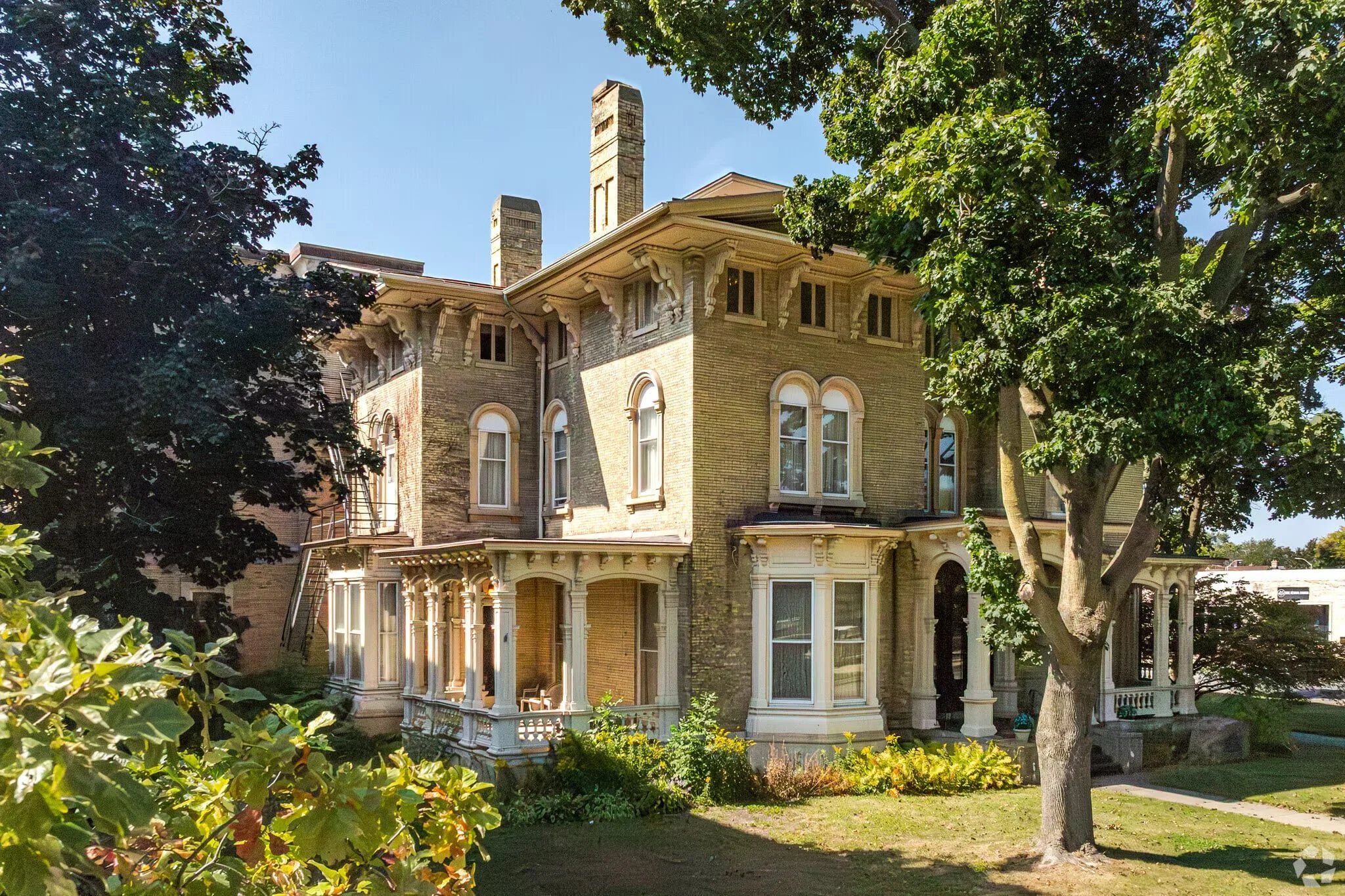
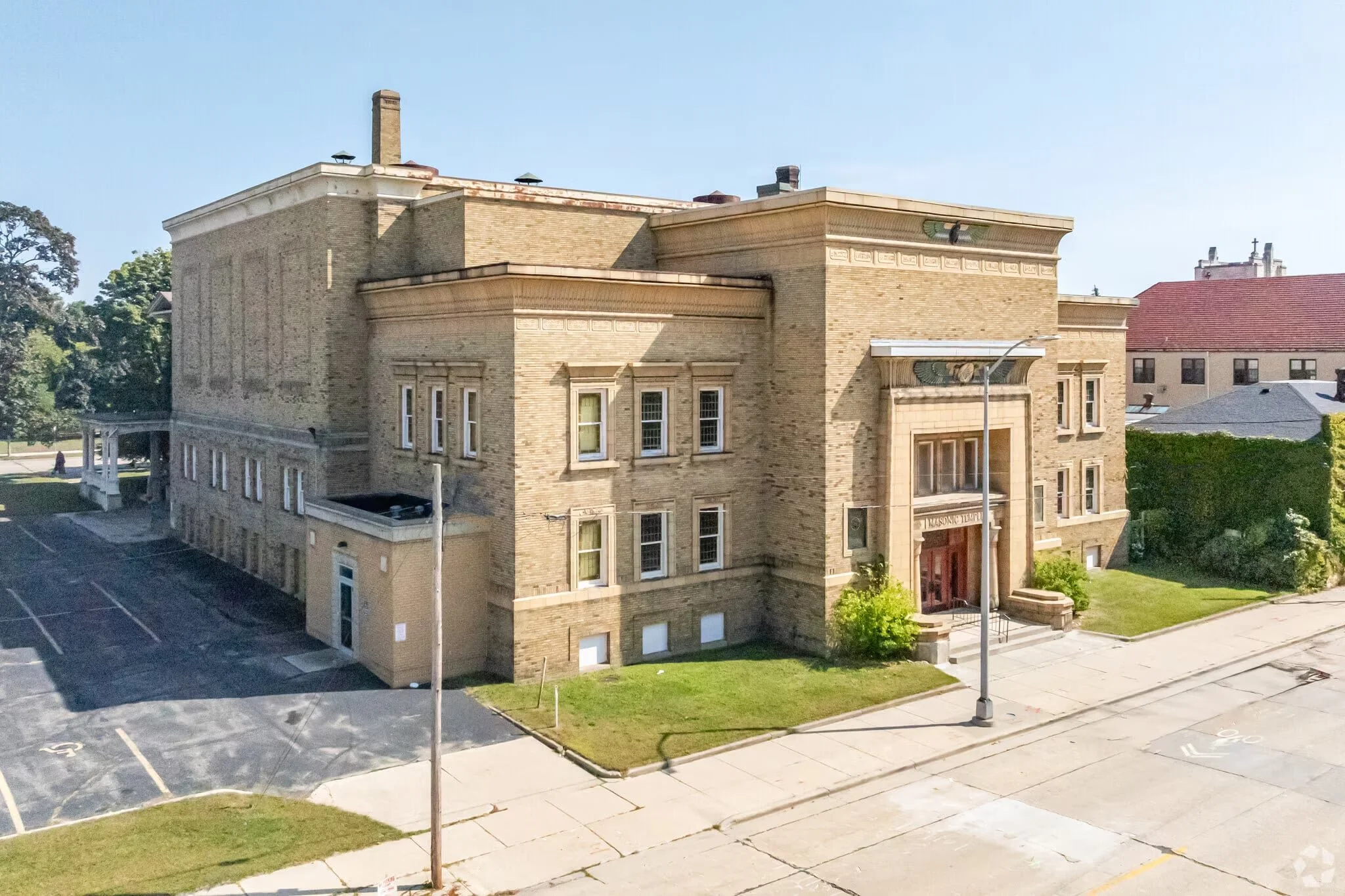
When older buildings like the Racine Masonic Center linger on the market for years, or end up in foreclosure or auction, they face real risks of demolition. However, instead of loss, we are thrilled the Racine Masonic Center has found champions ready to invest in its future.
Neil and Moe Redding purchased the property at auction and are relocating from Grand Rapids, Michigan, to take on the project. Their goal: restore and activate the building as an events venue that once again serves the Racine community.
A Serendipitous Discovery
The Redding’s path to Racine wasn’t planned. After touring a different Masonic property in Kenosha — Moe’s original hometown — and realizing it would not meet their needs, they discovered the Racine Masonic Center auction listing and decided to attend the open house.
That visit, as they say, changed everything.
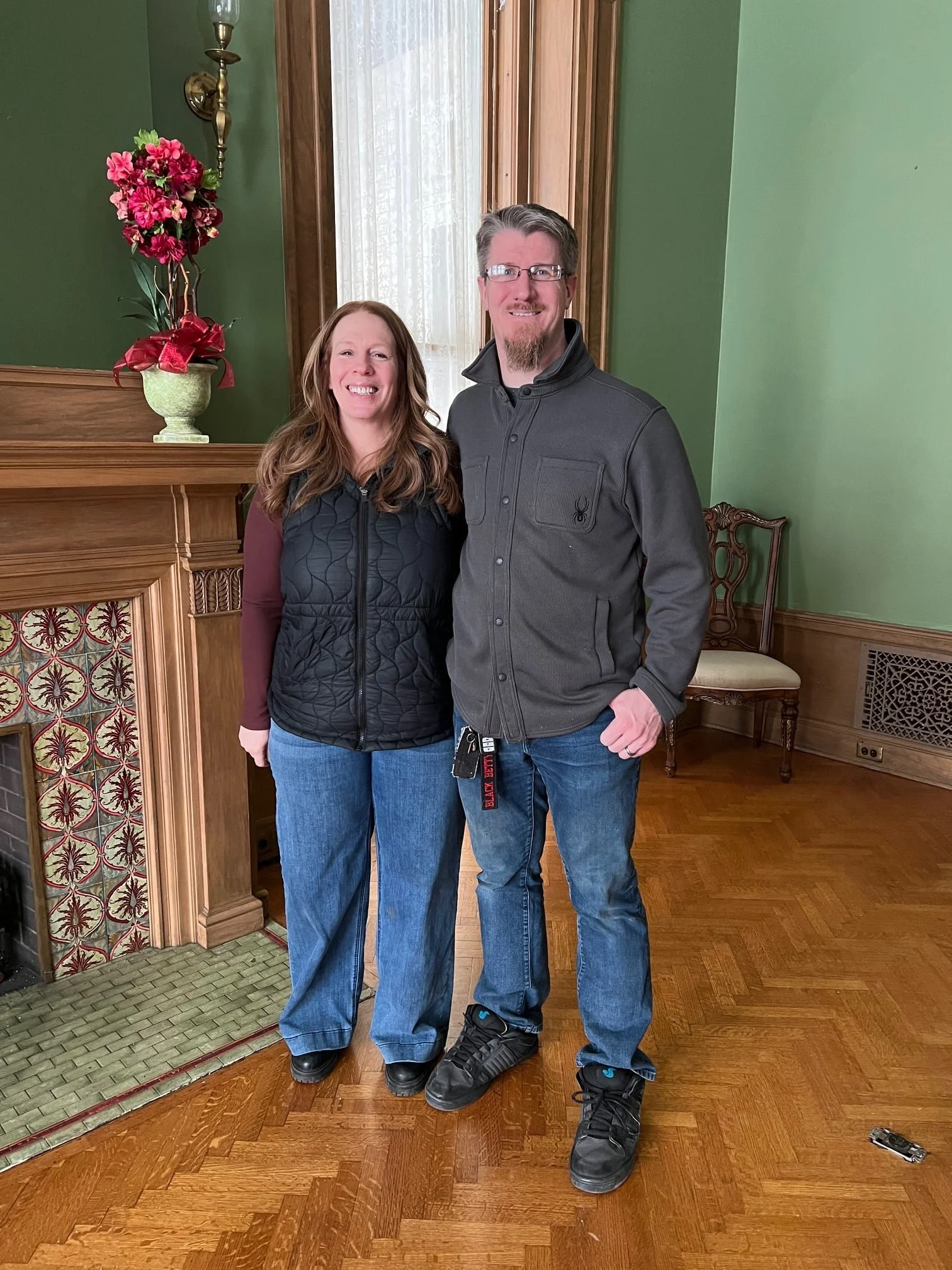
The 43,500-square-foot property, equipped with a Masonic hall added in the 1920s, offered exactly what they had been hoping to find: architectural character, generous space, and strong bones. And although the mansion on the property was built in 1856, the building benefits from newer HVAC systems and a fully equipped commercial kitchen, making it well-suited for reuse as an events venue, even as renovations move forward.
The Right Experience
Together, the Reddings see the Racine Masonic Center as both a preservation project and their next professional chapter. Neil is retiring from a career in industrial controls engineering, bringing decades of technical expertise to the rehabilitation effort. His wife, Moe and her sister are experts in events and venue operations, giving them practical insight into how to market and manage a large gathering space.
What Comes Next?
The Reddings plan to approach the project in phases. Their first priority is activating the ballroom for events, with plans to move next to spaces such as the Egyptian Hall and Doric Hall, and eventually the historic mansion.
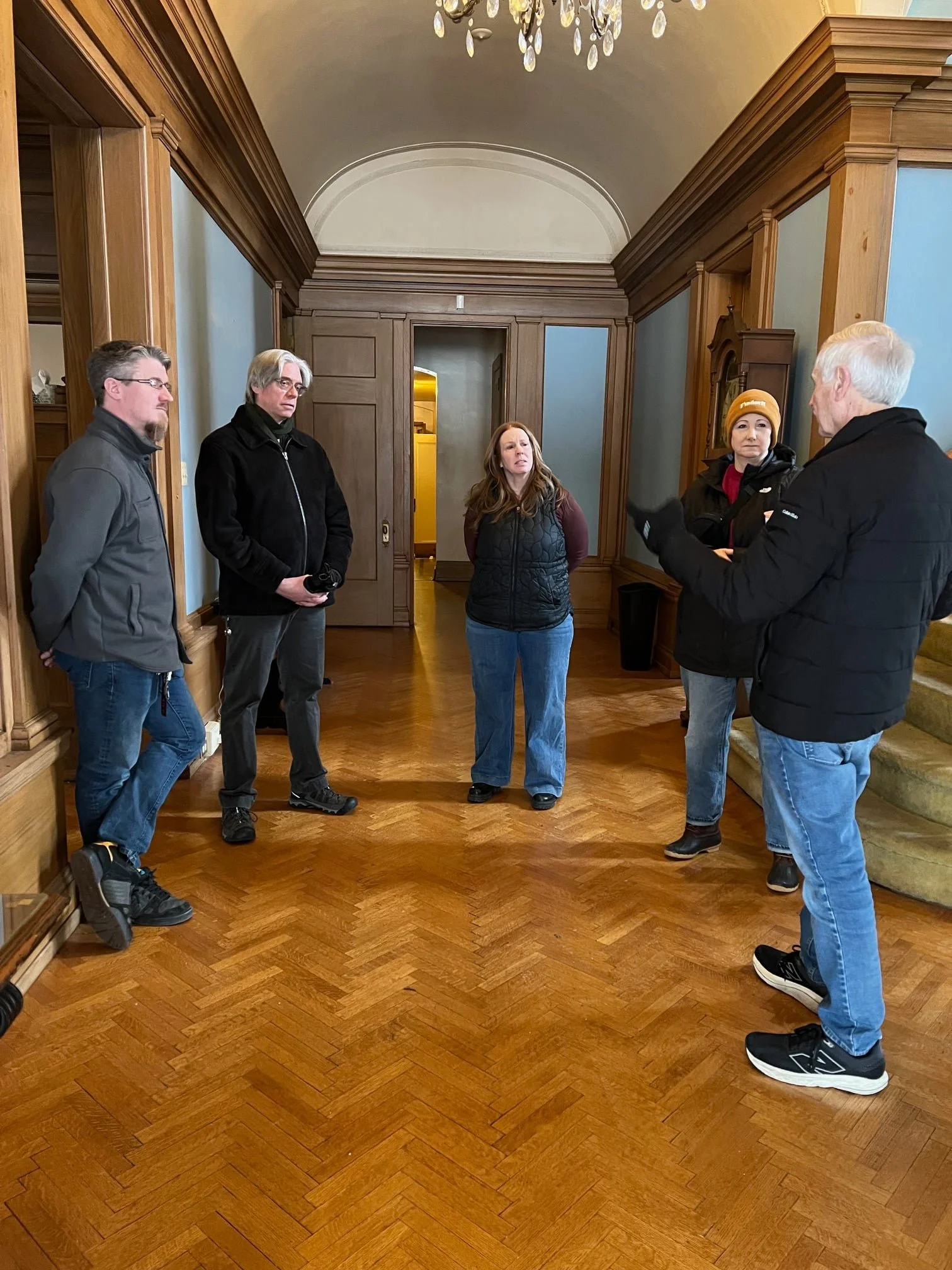
Early efforts are already making a difference. Cleaning, organizing, and simple updates like replacing lightbulbs have already brightened the building — small steps that signal the larger transformation to come.
Given the scale of the project, the Wisconsin Trust will serve as a resource on state and federal historic tax credits that can play a role in offsetting the costs of rehabilitation. These programs are powerful tools in supporting preservation-minded owners while protecting the architectural features that make built environments like the Racine Masonic Center significant.
A Gathering Place Once Again
Neil and Moe envision the Racine Masonic Center as more than an events venue. With its large halls and historic detailing, the building offers exciting possibilities for cultural use.
“We are so excited about the endless possibilities this space holds — from hosting the symphony, local theater performances, and choirs to celebrating weddings, elegant galas in the ballroom, and meaningful fundraising events. The opportunities truly feel limitless.” - Neil Redding
They anticipate the ballroom will be available by the end of May, 2026. Those interested can reach out via email at grandtempleevents@gmail.com while their website (grandtempleevents.com) is in development.
A Preservation Success Story in the Making — and a Reminder
We are grateful to see the Racine Masonic Center in the hands of owners committed to its future. This example serves as a powerful reminder that historic buildings do not preserve themselves — it takes people and communities willing to step forward, take risks, and believe in what these places can become.
Neil and Moe Redding’s story shows what can happen when the right people connect with the right building at the right time. We look forward to sharing updates as the Racine Masonic Center begins its next chapter — and to helping other historic places find their champions as well.
———
Do you have a historic property in your community that has been languishing ind disrepair or sitting on the market for years? Is there a building at risk of foreclosure, neglect, or demolition? We want to hear about it. The earlier preservation conversations begin, the more options are available.