A city of Milwaukee ordinance requiring documentation of historic buildings prior to demolition was passed by the Common Council last month.
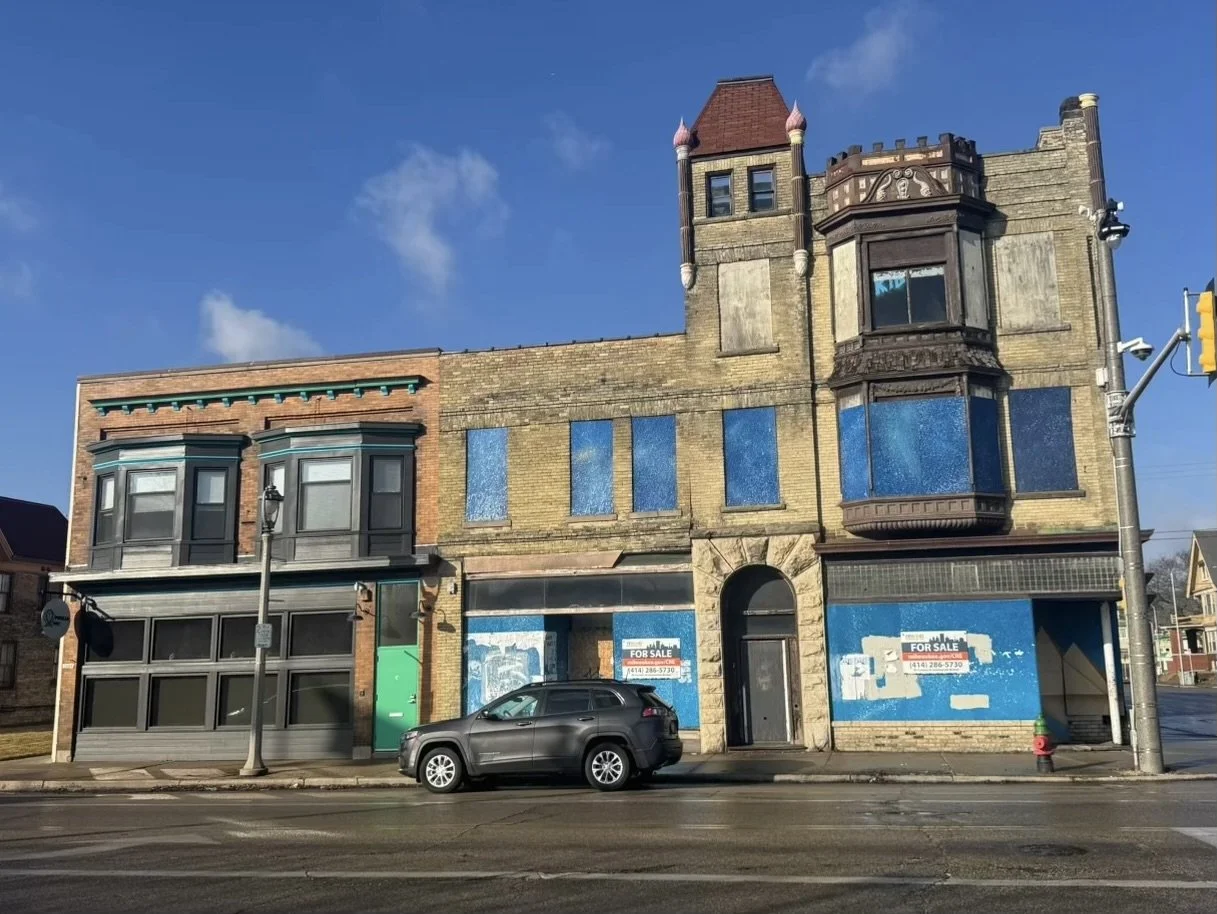
Milwaukee has taken a major step forward in historic preservation policy with a new ordinance sponsored by Alderman Robert Bauman requiring historically designated buildings—and buildings located within historic districts—to be laser scanned and digitally archived before a demolition permit can be issued.
Leading in Digital Documentation
The ordinance places Milwaukee among the first cities in the country to formally incorporate advanced 3D digital documentation into the demolition review process for historic buildings.
Laser scanning works by placing a scanner at multiple locations inside and around a building. The scanner emits an infrared beam that records millions of precise spatial measurements every second. Those scans are then combined to create a highly accurate digital model of the structure—capturing not only its appearance, but also its dimensions, geometry, and architectural details.
Creating a permanent archival record
The ordinance recognizes an important reality in preservation work: not every historic building can ultimately be saved. But even when demolition moves forward, the building’s architectural and historical information does not have to disappear with it. Digital documentation creates a permanent archival record that can support future research, education, restoration studies, and public interpretation.
Importantly, the ordinance does not prevent redevelopment or growth. Instead, it adds a documentation step before demolition can proceed. Under the new policy, the Historic Preservation Commission (HPC) may withhold demolition permits “until required documentation is submitted in compliance with adopted standards,” unless an exception is granted.
Digital technologies to strengthen preservation efforts
Among those advocating for the ordinance was Matt Jarosz, a member of the HPC and Director of the Historic Preservation Institute (HPI) at the University of Wisconsin–Milwaukee. His support reflects a growing understanding within the preservation field that digital technologies can strengthen preservation practice while acknowledging the economic and practical realities surrounding historic properties.
That philosophy is already shaping preservation education at UW–Milwaukee. Through the Historic Preservation Institute, architecture students are challenged to develop adaptive reuse concepts for historic buildings while also learning how to create archival-quality documentation that meets Library of Congress standards. Using the same laser scanning technology now required under the ordinance, students learn to produce detailed digital records as part of elective coursework focused on preservation documentation.
As preservation tools evolve, Milwaukee’s new ordinance demonstrates how technology can help communities retain knowledge of historic places even when physical preservation is not possible. By embracing digital documentation, the city is helping ensure that Milwaukee’s architectural heritage remains accessible to future generations.