• home
  • directory
    • membership
    • donation
    • support wi historic tax credit program
    • video
    • places
    • tax credits
    • housing that works 2026
    • banking on preservation 2025
    • sacred places 2024
    • historic theaters 2021
  • news
  • events
    • mission
    • board & staff
  • contact
  • member login
Menu

Wisconsin Trust for Historic Preservation

Advocates for Wisconsin's Historic Places
  • home
  • directory
  • support us
    • membership
    • donation
  • resources
    • support wi historic tax credit program
    • video
    • places
    • tax credits
  • taliesin workshops
    • housing that works 2026
    • banking on preservation 2025
    • sacred places 2024
    • historic theaters 2021
  • news
  • events
  • about
    • mission
    • board & staff
  • contact
  • member login
×

Wisconsin Preservation News


When “Replacement Cost” Doesn’t Mean Historic Restoration | Historic Property Insurance Checklist

Info Account May 19, 2026

Historic property owners are facing growing challenges in today’s insurance market, and many are discovering that terms they thought they understood may not mean what they expect when a claim occurs. Some insurers are becoming more hesitant to insure certain historic properties, while others are narrowing coverage through endorsements that limit historic restoration obligations.

Download our Historic Property Insurance Checklist‍ ‍when preparing to review coverage for you historic building.

Understanding Coverage Risks for Historic Property Owners

That issue recently came into focus for a Milwaukee owner of several historic properties. After renewing coverage on a historic apartment building, he was surprised to receive a “Historic Building Valuation and Coverage Limitation Endorsement” included with the policy.

The endorsement stated that if the building were damaged, the insurer would pay only for the “least costly, functionally equivalent” repair or reconstruction using commercially available modern materials and methods.

In practical terms, the policy would restore the building’s function — apartments, offices, or commercial space — but not necessarily its historic architectural details, materials, or craftsmanship. The endorsement also excluded requirements to match historic materials or maintain aesthetic consistency with undamaged portions of the building, and certain increased costs associated with compliance with historic preservation requirements or local ordinances.

How Insurance Valuation Impacts Historic Building Restoration

Many property owners assume replacement coverage would mean rebuilding something close to the historic building they own. In reality, insurance policies may use any of several different valuation methods that can lead to very different rebuilding outcomes after a loss.

Three common valuation approaches include:

  • Replacement Cost — rebuilding with materials of similar kind and quality using currently available construction methods (which may not replicate original historic materials);

  • Functional Replacement Cost — rebuilding the property based on its intended function using the least costly materials and methods that achieve that function; and

  • Reproduction Cost — rebuilding an exact replica using original materials,  design, and craftsmanship.

Functional replacement cost is a legitimate insurance option and may make economic sense for some owners and properties, given the added cost of historic restoration. Problems arise, however, when owners do not fully understand what valuation method is being used or what limitations and exclusions may apply after a loss.

Protecting Your Historic Property Investment

Historic property owners may also face additional complications because some buildings are located within local historic districts or are subject to preservation agreements, tax credit requirements, or local ordinances that affect how repairs must be completed after damage. If insurance policies exclude those costs, owners may be responsible for paying the difference themselves.

Lenders can further complicate the picture. In some cases, lenders require insurance limits based on higher estimated reconstruction values, while the policy itself  may limit rebuilding to a functionally equivalent structure depending on applicable endorsements. As a result, owners may pay premiums based on one rebuilding assumption while the policy settles claims based on another.

Specialized Advice Matters for Historic Property Coverage

As insurance markets continue to evolve, historic property owners should review policies carefully and ask questions before renewal or binding coverage. Understanding the difference between replacement cost, functional replacement cost, and reproduction cost coverage is becoming increasingly important for anyone who owns or manages a historic property.

“Historic property insurance is rarely one-size-fits-all,” says Ariana Carney, a property and casualty consultant with the Hausmann Group. “Because these buildings involve unique valuation and restoration issues, owners benefit from a relationship with an agent or advisor who understands those complexities and can help align coverage with preservation obligations, lender requirements, the owner’s goals, and risk tolerance.”

Download our Historic Property Insurance Checklist for questions to discuss with your insurance advisor, lawyer, and lender when reviewing coverage for a historic building.

In Preservation Post, Advocacy in Action Tags Historic Property Insurance Checklist, Historic Restoration

Help Us Celebrate Preservation Month: Share a Place Worth Preserving

Info Account May 11, 2026

In honor of Historic Preservation Month this May, and this year’s theme, “All People Are Created Equal,” we’re asking Wisconsinites to help us tell the stories of places that matter.

What places in your community are worth preserving — and why?

We’re looking for photos and short stories about places across Wisconsin that hold meaning for you. They might be architecturally significant landmarks, but they could also be ordinary places with extraordinary stories: a neighborhood tavern, a school, a family farm, a union hall, a church, a corner store, a main street building, or a site connected to local history, culture, work, or memory.

Some places are beautiful. Some are humble. Some are fading from view. All can tell important stories about the people and communities that shaped Wisconsin.

To participate, email us:

  • A photo of the place (one you took yourself or otherwise have permission for us to use)

  • The name and location of the place

  • A brief story about what makes it meaningful or worthy of preservation

Please send submissions to info@wipreservation.org.

Throughout Preservation Month (and beyond), we’d like to highlight places and stories from around the state that reflect Wisconsin’s rich and varied history — from iconic landmarks to everyday places that matter deeply to the people who know them best.

In Advocacy in Action, WTHP News Tags Preservation Month, Place Worth Preserving

Governor Signs AB 375 into Law | Historic Tax Credit Repair Bill

Info Account May 9, 2026

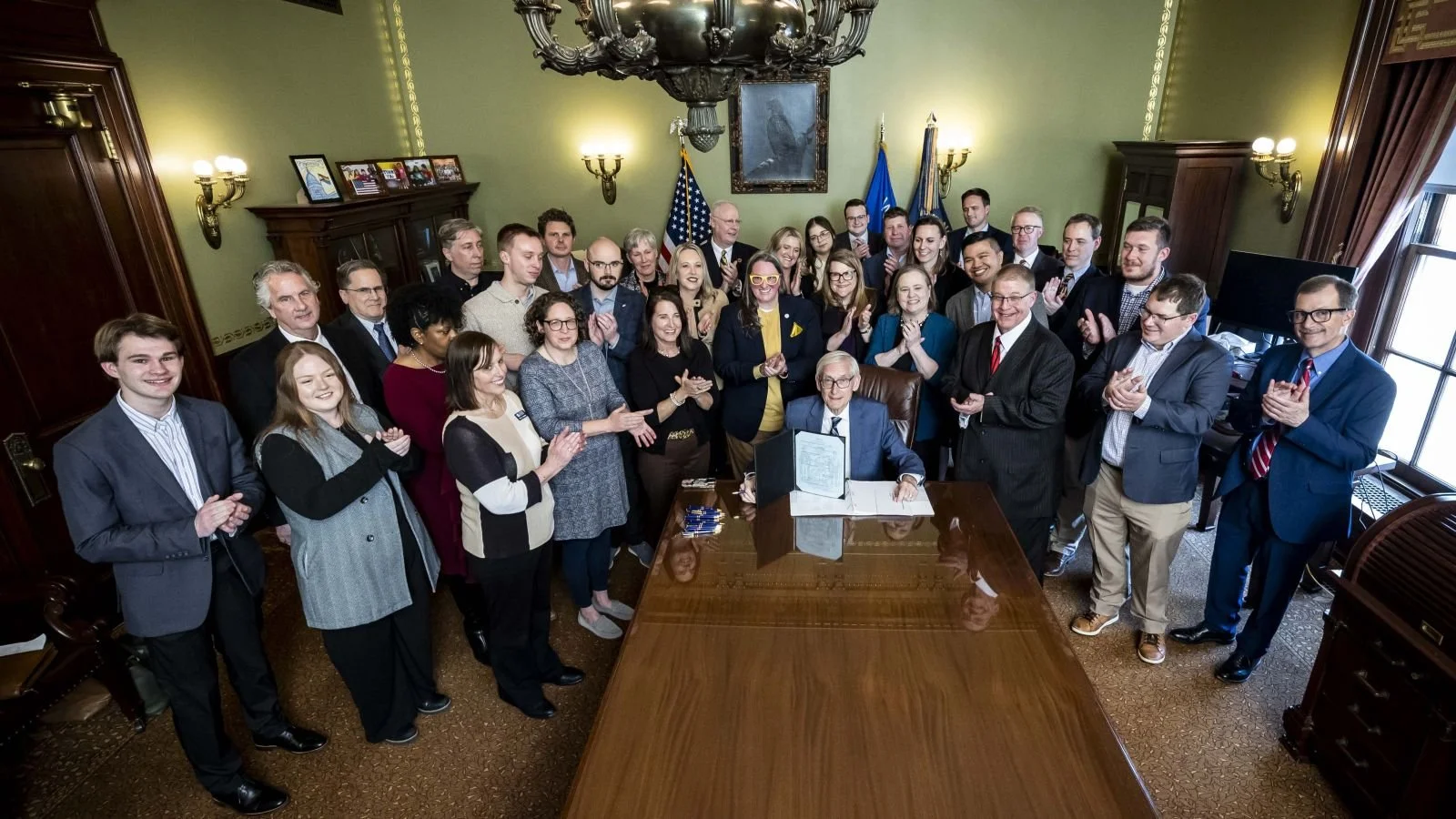
On April 9, 2026, Governor Tony Evers signed AB 375 into law during a ceremony at the State Capitol, marking a major milestone for historic preservation and community development efforts across Wisconsin.

The bill represents the culmination of more than a year and a half of collaboration among a broad coalition of partners and advocates working to strengthen preservation tools and support investment in historic places throughout the state. Supporters attending the signing ceremony included representatives from the Wisconsin Trust for Historic Preservation, the Wisconsin Historical Society, WEDC, WEDA, and many other organizations and stakeholders who helped advance the legislation.

The signing ceremony celebrated not only the passage of AB 375, but also the power of partnership in shaping policies that support preservation, economic development, and community revitalization across Wisconsin.

Stay tuned for more news and updates on historic tax credits in Wisconsin.

In Advocacy in Action, Tax credits Tags Governor Tony Evers, AB 375

Documenting Historic Buildings Before They Disappear

Casey Ernsting May 8, 2026

Learn how the new scanning ordinance strengthens historic preservation through digital documentation and building recording requirements.

Read More
In Advocacy in Action, Milwaukee Tags Preservation Policy, Local Ordinances, laser scan, Documentation

Historic Tax Credit Repair Bill Passes - Thank You for Showing Up

Info Account March 20, 2026

We are pleased to share that AB 375, the Historic Tax Credit Repair Bill, passed in the Wisconsin Senate on March 17 and is headed to the Governor’s desk for signature!

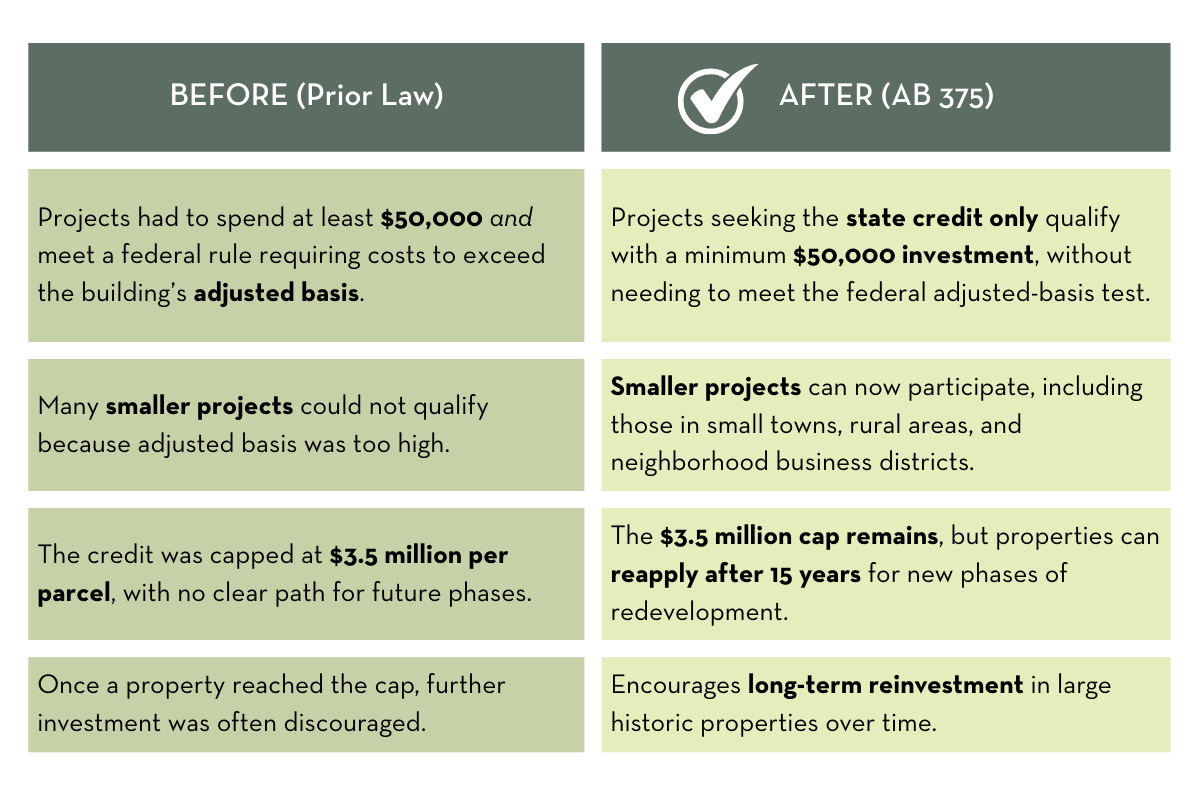
This legislation makes targeted improvements to the state historic tax credit by:

  • Lowering the minimum qualifying expenditure to $50,000, making the credit more accessible for smaller projects and communities

  • Allowing projects that have reached the $3.5 million credit cap to reapply after 15 years, supporting the long-term stewardship of Wisconsin’s historic buildings

Together, these changes expand access to the credit and help ensure that more preservation projects—large and small—can move forward.

Thank You for Showing Up

This achievement reflects the strength of our community. Members, partners, and advocates across the state stepped up—attending Historic Preservation Day at the Capitol, calling legislators, sending emails, reaching out to others, and sharing real stories about how the historic tax credit supports local economies, housing, and the continued use of historic places.

Every action mattered.

When the preservation community shows up—by speaking out, sharing stories, and taking action—we are heard. And together, we made this happen.

Bill Recap - What We Accomplished Together

Assembly Bill 375 restores access for smaller projects and allows continued investment in larger historic properties.

Looking Ahead

While this is meaningful progress, there is more work ahead. In future legislative sessions and budget discussions, we will continue to advocate for improvements to the credit—including returning to a one-year structure to further strengthen its impact.

This success also underscores something bigger: our ability to organize, engage, and influence policy. It invites us to think strategically about what comes next.

What other legislative priorities should we advance? What tools do communities need to support preservation across Wisconsin?


Help Advance This Work

Help us keep this work moving forward.

The Wisconsin Trust relies on member support to fund research and education that demonstrate how the Historic Tax Credit drives private investment, job creation, and community revitalization across Wisconsin.

Join the Trust or make a gift today to ensure we can provide policymakers with the information they need to make informed decisions.

Become a Member
Make a Donation
In Preservation, Tax credits, Advocacy in Action Tags Historic Tax Credit Repair Bill
No results found
 

Consider helping financially by becoming a member.

Members receive invitations to special events and access to our full list of growing resources

Become a Member

Wisconsin Trust for Historic Preservation  |  PO Box 1336  |  Oshkosh, WI 54903