Historic property owners are facing growing challenges in today’s insurance market, and many are discovering that terms they thought they understood may not mean what they expect when a claim occurs. Some insurers are becoming more hesitant to insure certain historic properties, while others are narrowing coverage through endorsements that limit historic restoration obligations.
Download our Historic Property Insurance Checklist when preparing to review coverage for you historic building.
Understanding Coverage Risks for Historic Property Owners
That issue recently came into focus for a Milwaukee owner of several historic properties. After renewing coverage on a historic apartment building, he was surprised to receive a “Historic Building Valuation and Coverage Limitation Endorsement” included with the policy.
The endorsement stated that if the building were damaged, the insurer would pay only for the “least costly, functionally equivalent” repair or reconstruction using commercially available modern materials and methods.
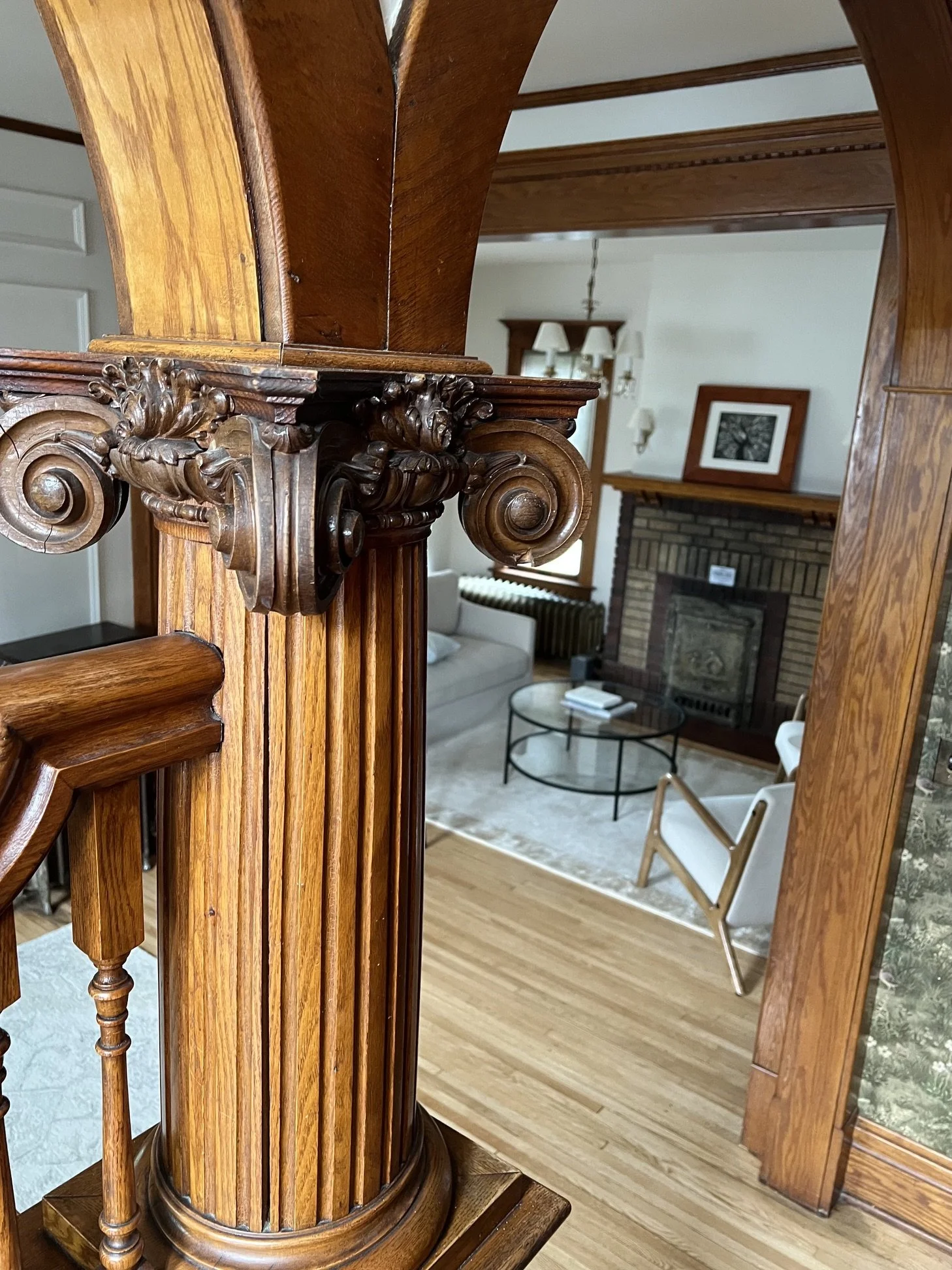
In practical terms, the policy would restore the building’s function — apartments, offices, or commercial space — but not necessarily its historic architectural details, materials, or craftsmanship. The endorsement also excluded requirements to match historic materials or maintain aesthetic consistency with undamaged portions of the building, and certain increased costs associated with compliance with historic preservation requirements or local ordinances.
How Insurance Valuation Impacts Historic Building Restoration
Many property owners assume replacement coverage would mean rebuilding something close to the historic building they own. In reality, insurance policies may use any of several different valuation methods that can lead to very different rebuilding outcomes after a loss.
Three common valuation approaches include:
Replacement Cost — rebuilding with materials of similar kind and quality using currently available construction methods (which may not replicate original historic materials);
Functional Replacement Cost — rebuilding the property based on its intended function using the least costly materials and methods that achieve that function; and
Reproduction Cost — rebuilding an exact replica using original materials, design, and craftsmanship.
Functional replacement cost is a legitimate insurance option and may make economic sense for some owners and properties, given the added cost of historic restoration. Problems arise, however, when owners do not fully understand what valuation method is being used or what limitations and exclusions may apply after a loss.
Protecting Your Historic Property Investment
Historic property owners may also face additional complications because some buildings are located within local historic districts or are subject to preservation agreements, tax credit requirements, or local ordinances that affect how repairs must be completed after damage. If insurance policies exclude those costs, owners may be responsible for paying the difference themselves.
Lenders can further complicate the picture. In some cases, lenders require insurance limits based on higher estimated reconstruction values, while the policy itself may limit rebuilding to a functionally equivalent structure depending on applicable endorsements. As a result, owners may pay premiums based on one rebuilding assumption while the policy settles claims based on another.
Specialized Advice Matters for Historic Property Coverage
As insurance markets continue to evolve, historic property owners should review policies carefully and ask questions before renewal or binding coverage. Understanding the difference between replacement cost, functional replacement cost, and reproduction cost coverage is becoming increasingly important for anyone who owns or manages a historic property.
“Historic property insurance is rarely one-size-fits-all,” says Ariana Carney, a property and casualty consultant with the Hausmann Group. “Because these buildings involve unique valuation and restoration issues, owners benefit from a relationship with an agent or advisor who understands those complexities and can help align coverage with preservation obligations, lender requirements, the owner’s goals, and risk tolerance.”
Download our Historic Property Insurance Checklist for questions to discuss with your insurance advisor, lawyer, and lender when reviewing coverage for a historic building.