Conference Stories | Hospital Building at Wisconsin Veterans Home – King, WI

The following excerpt was presented by the Wisconsin Trust for Historic Preservation at the 2013 Local History and Historic Preservation Conference in early October. This excerpt is the seventh in a series of eight stories we will publish to the WTHP blog over the next few weeks. Please check back often for more. You can find the whole series here.

95164690.jpg

The Wisconsin Department of Veterans Affairs plans to demolish the 1929 Hospital Building on the campus of the Wisconsin Veterans Home at King for the construction of a new 200-bed skilled nursing facility. The building, designed by Arthur Peabody, is listed on the State and National Registers of Historic Places. The Wisconsin Veterans Home was established by the Grand Army of the Republic in 1888 on the shores of Rainbow Lake, part of Waupaca’s Chain O’ Lakes. Arthur Peabody was born in Eau Claire in 1858 and was campus architect for the University of Wisconsin – Madison from 1905 to 1915. He became state architect of Wisconsin in 1915 and designed a number of Madison landmarks, including the Wisconsin State Office Building, the UW Memorial Union, Camp Randall Field House, and the university’s Carillon Tower.

Conference Stories | Rothschild Pavilion – Rothschild, WI

The following excerpt was presented by the Wisconsin Trust for Historic Preservation at the 2013 Local History and Historic Preservation Conference in early October. This excerpt is the sixth in a series of eight stories we will publish to the WTHP blog over the next few weeks. Please check back often for more. You can find the whole series here.

pavfire.jpg

In 2000, Rothschild’s Halls, Parks, and Grounds Committee recommended that the 1911 Rothschild Pavilion be demolished and replaced with a smaller building. One of the outstanding features of the pavilion is its 6,725 square foot dance floor. Constructed of 1 ½” inch strips of maple, the entire floor is supported by 24 large railroad springs with steel plates affixed on each end. These springs give the vast floor flexibility and strength, while providing a wonderful surface for dancing. In 2002, citizens concerned about the fate of this National Register-listed community treasure formed the Rothschild Pavilion Preservation Committee (RPPC). The RPPC contacted the Wisconsin Trust for Historic Preservation and the Trust placed the building on that year’s Ten Most Endangered Historic Properties list. Thanks to the efforts of the RPPC and the support of the community, the building was restored and once again made available for community and private events. The RPPC’s ongoing mission is to promote cooperation for the benefit of preserving the Rothschild Pavilion and to provide charitable assistance and support for planning, preserving, and promoting the Pavilion. The Village of Rothschild adopted a Pavilion Park Master Plan in January 2013, with a guiding principle to preserve and enhance the 26 acre park’s historic architectural and landscape features.

Download the PDF of this story here

Conference Stories | Canadian National Railroad and the City of Oshkosh – Oshkosh, WI

The following excerpt was presented by the Wisconsin Trust for Historic Preservation at the 2013 Local History and Historic Preservation Conference in early October. This excerpt is the fifth in a series of eight stories we will publish to the WTHP blog over the next few weeks. Please check back often for more. You can find the whole series here.

bridge.jpg

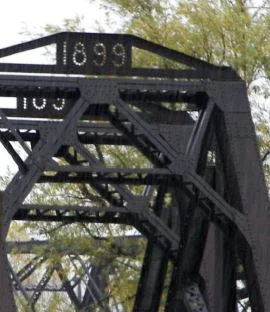
Interpretation of 1899 Chicago & North Western Railway Bridge

The City of Oshkosh Landmarks Commission and the Canadian National Railroad worked together to save portions of the 1899 Chicago and North Western Railway Swing bridge over the Fox River at Oshkosh. Although the historic bridge was dismantled and replaced with a new bridge in 2013, both parties worked diligently and cooperatively to save the original bridge’s 1899 date plaque and builder’s plate. These remnants will be incorporated into interpretive panels to be installed along the north and south shores of the Oshkosh’s River Walk. The Canadian National Railroad donated money for the creation and installation of the interpretive panels. In addition, twenty foot sections of the north and south shore bridge spans have been retained by the city for eventual incorporation into the south shore River Walk. The joint project is an excellent example of public and private cooperation for the benefit of the community.

Download the PDF of this story here.

Conference Stories | Garwin Mace Lime Kilns at Lime Kiln Park – Menomonee Falls, WI

The following excerpt was presented by the Wisconsin Trust for Historic Preservation at the 2013 Local History and Historic Preservation Conference in early October. This excerpt is the fourth in a series of eight stories we will publish to the WTHP blog over the next few weeks. Please check back often for more. You can find the whole series here.

523451-L.jpg

Lime Kiln Park is graced with the town’s namesake falls of the Menomonee River. It is also the site of two National Register-listed lime kilns, erected in 1890 to service the nearby limestone quarry. By 2010, the Lannon stone kilns were in desperate need of restoration; the Village of Menomonee Falls funded repair work on the lime kilns beginning in 2011. The original scope of the repair was to clean and re-point all mortar joints on both structures. It soon became apparent that one of the kiln’s load bearing arches was near the point of collapse. Masonry Restoration, Inc. was tasked with the careful removal and documentation of the stone façade, the dismantling of over eight feet of crumbling backup walls, and the rebuilding of the load bearing arches. These repairs have extended the life of the structures so that they may continue to convey an important piece of early Menomonee Falls history.

Download the PDF of this story here

Conference Stories | White Elm Nursery – Hartland, WI

The following excerpt was presented by the Wisconsin Trust for Historic Preservation at the 2013 Local History and Historic Preservation Conference in early October. This excerpt is the thirdin a series of eight stories we will publish to the WTHP blog over the next few weeks. Please check back often for more. You can find the whole series here.

whiteelmnursery.jpg

The 1929 White Elm Nursery, designed by prominent Milwaukee architectural firm Eschweiler and Eschweiler, is a scholarly example of the Tudor Revival Style applied to an unusual building type. The first floor of the building housed office and retail space for the nursery, while the upstairs was living quarters for the property’s caretaker. A large brick chimney stack on the south facade serviced the boiler that provided steam power for the nursery. The building and its associated structures functioned as a nursery and greenhouse for almost 75 years. In 1986, White Elm Nursery was determined eligible for inclusion in the National Register Multiple Property Listing for Hartland. It is currently bank-owned and threatened with demolition for a proposed 36-unit apartment complex. The Hartland Historical Society is encouraging the owner and developer to search for creative solutions to retain and restore the Tudor Revival building.

Download the PDF of this story here

Conference Stories | Southport Beach House – Kenosha, WI

The following excerpt was presented by the Wisconsin Trust for Historic Preservation at the 2013 Local History and Historic Preservation Conference in early October. This excerpt is the second in a series of eight stories we will publish to the WTHP blog over the next few weeks. Please check back often for more. You can find the whole series here.

0009692a-l.jpg

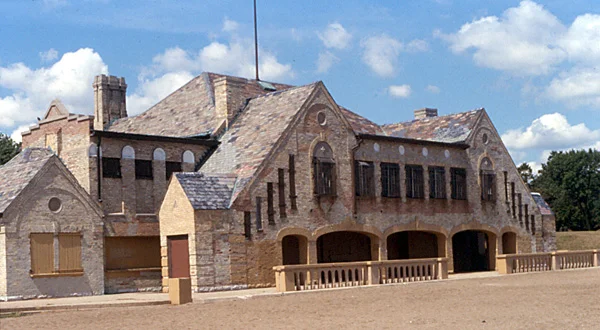
The eclectic Southport Beach House was constructed between 1936 and 1941 under the auspices of the Works Progress Administration. It was designed by Christian Borggren, a Danish-born architect in Kenosha’s planning department. Recycled materials were used in the building’s construction, including slate from Racine’s razed Chicago & North Western Railway depot, bricks from the Bain Wagon Works, and marble from the Kenosha post office. Re-use of these quality materials enabled the beach house to achieve a higher level of finishes than otherwise would have been possible. The overall design of the Southport Beach House is an interesting mix of architectural styles, from Tudor windows and Mediterranean arches on the east facade to Classical Revival symmetry and detailing on the west facade.

0009692d-l.jpg

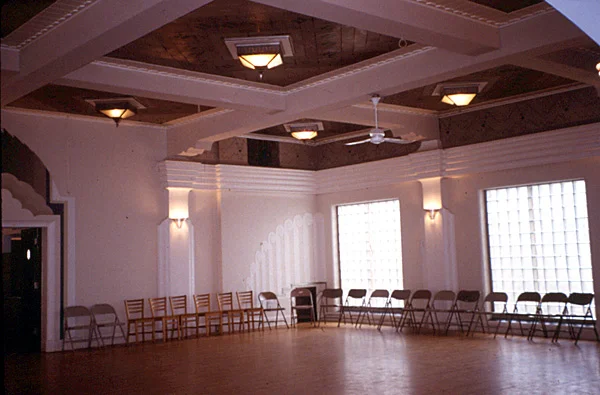
The interior is pure Art Deco, with geometric ornamentation on the walls and ceiling executed in paint, raised plaster, and aluminum banding. Today, the Southport Beach House is available for public and private events. The City of Kenosha would like to restore the National Register-listed and locally landmarked building to its original elegance and has received a Wisconsin Coastal Management grant to partially fund the project. Design work is currently underway, with restoration scheduled to begin in 2014.

Download the PDF of this story here

Hotel Grafton Apartments (Grafton, WI)

The following excerpt was presented by the Wisconsin Trust for Historic Preservation at the 2013 Local History and Historic Preservation Conference in early October. This excerpt is the first in a series of eight stories we will publish to the WTHP blog over the next few weeks. Please check back often for more. You can find the whole series here.

logo-wo-bkgrd-175px.fw_.png

Hotel Grafton was built in 1892 in response to the need for a hotel/rooming house on the busy commercial corridor between Milwaukee and Sheboygan. Built solidly on the bedrock lying 7’ below the surface, the Cream City brick building was originally named Mueller Hotel. The building continued to function as a hotel, boarding house, restaurant and/or tavern until 2003. However, its original appearance was altered dramatically in the mid-1950s with the removal of the decorative cupola with ‘witches hat’ roof, the stepped masonry parapet, and the decorative porch on the west elevation.

hotel-grafton.jpg

Non-original openings were made in the exterior walls on all elevations to accommodate mechanical equipment, original fenestration patterns were altered, and the brick was painted. By 2005, the building was considered a local eyesore.

In late 2009, the Village of Grafton Community Development Authority purchased the building and issued a Request for Proposals to explore adaptively re-purposing Hotel Grafton, located in the heart of Grafton’s revitalized Central Business District. Architects Paul Rushing and Jim Read were selected for the project. After eighteen months of discussion and design, the current adaptive re-use as an apartment building was defined and approved. The exterior restoration included the reconstruction of the prominent cupola. Construction began in spring of 2011 and the first tenants moved into the Hotel Grafton Apartments in April 2012.

Download the PDF of this story here

Taliesin Full Tour Season Underway

Spring Green, WI, - The 600-acre Taliesin Estate, which contains Frank Lloyd Wright’s iconic home, is once again awakening from hibernation to welcome tourists. Wright is considered one of the most influential architects of the 20thcentury, and his personal estate attracts fans the world over eager to explore the root of his genius. The full tour season begins May 1st and the National Historic site will be open every day through October 31st. Taliesin (tal-ee-EH-sin) was built in 1911 in a rural valley originally inhabited by Wright’s maternal ancestors. Wright spent much of his youth there and would later leave Chicago, return to the area and devote nearly fifty years of his life to developing a community infused with beauty, art, vitality and architecture. Today, these attributes are still intact and efforts to preserve and restore the estate, while educating the public about the life and work of the architect, are ongoing.

The Taliesin estate features five Wright-designed structures spanning many decades of Wright’s career. The size and historical scope of the Taliesin Estate are such that Taliesin Preservation, Inc. (TPI) offers eight different tour options to the public during the regular season. Tours are offered every day and include the Hillside School Tour (1 hour), House Tour (2 hours), Highlights Tour (2 hours) and Estate Tour (4 hours). Specialty tours are scheduled one Friday per month for those Wright enthusiasts eager to dig deeper into the multi-faceted layers of Taliesin - the Landscape Tour, Preservation Tour, Exploring Taliesin Tour and Loving Frank Tour.

For tour descriptions, pricing and reservations, call 877-588-7900 or visit www.taliesinpreservation.orgTPI also offers a wide range of art and architectural outreach programs for youth and adults throughout the regular season. Call or visit our website for details.

Advance reservations are strongly recommended for all tours. Walk-ins are welcome as space permits. Children under the age of 12 are only permitted on the Hillside School Tour. Group rates of 21 or more are available by advance reservation for the House and Hillside Tours. Accessible tours can be arranged with three weeks’ notice by special arrangement. Call for details. All tours begin at the Frank Lloyd Wright Visitor Center, located two miles south of Spring Green, Wisconsin, at the intersection of Hwy. 23 and Cty. Rd. C. Taliesin is one hour west of Madison, 2.5 hours west of Milwaukee, 3.5 hours from Chicago, and 5 hours from Minneapolis.

About Taliesin Preservation, Inc.: Founded in 1992, TPI operates the Frank Lloyd Wright Visitor Center at Taliesin, which offers public access to the site and grounds, serves as an educational resource on Frank Lloyd Wright and his work, and conducts the preservation program to maintain, restore and nurture the physical environment of the Taliesin Estate in Spring Green, Wisconsin. In partnership with the Frank Lloyd Wright Foundation, Inc., based in Scottsdale, Ariz., it is the mission of Taliesin Preservation, Inc. to conserve the masterful buildings and landscape of the Taliesin Estate, and to educate the public on the man, the architect, the architecture, and his ideas.

Pharmacy Central: Historic Stone's Building Would Close to Make Way for CVS

The following is republished from TheCityPages.com, a media publication headquartered in Wausau, WI.  If all goes as planned, CVS Caremark will build a pharmacy across the street from Walgreens on Bridge Street in Wausau and go head-to-head with its largest nationwide competitor.

The pharmacy would be built at 102 Bridge St., currently home to stone’s Building Center. Owner Doug Stone has accepted an offer to purchase his 2.68-acre property and if the deal goes through would close the building supply company, which first opened as the Leahy and Beebe’s sawmill in 1883. The site still is home to the older intact remnant from Wausau’s lumbering days.

“With the housing economy the way it is, it’s the best thing I can come up with right now,” Stone says. “I would love to have stayed and had it been successful…It’s better for us to have found someone who can use the property and continue to make it an asset to the city as opposed to us staying here and having to leave the thing empty and ugly.”

Changing Zones

The Wausau Plan Commission on July 17 voted 5-0 to approve a request by a CVS representative to change the property’s zoning from light industrial to commercial. The city Council will consider the request August 13 and if approved, the company can move forward with its plans.

CVS, headquartered in Rhode Island, owns 7,300 pharmacies nationwide, including 40 in Wisconsin.

As of June, Walgreens operated 7,907 drugstores nationwide, including 225 in Wisconsin. Based on revenues, CVS is ranked the 18th largest American-based corporation by Fortune Magazine and Walgreens No. 32.

Pharmacies Around the State

Walgreens operates three pharmacies in the Wausau area, including the recently opened drugstore at 17th and Stewart avenues. There are numerous other pharmacies in the community, some locally owned, including Young’s Hometown Pharmacy located across the ricer at 310 E. Bridge St.

It boils down to high traffic counts, city planner Brad Lenz says, in an effort to partly explain why a third pharmacy would open within five blocks of two others.

“Bridge street is the last crossing of the river – it takes a huge amount of traffic,” he says.

CVS Listening

To CVS’s credit, Lenz says the company is at least listening to suggestions that some element of the site’s historic structure be salvaged or incorporated into the new facility. Historian Gary Gisselman, also a city alderman told the Plan Commission July 17 that the sawmill, which in its heydey extended to the river bank where Graphic Packaging now is located, also was the site of the city’s first electric plant. The five-light dynamo machine” powered the mill and the remaining electricity was sold off to the city. The power plant was located inside a brick building, which still rests just north of the Stone’s Building office and showroom build in 1986.

Stone bought the company form his father in 1999.

He says his great grandfather Fowler P. Stone was a banker for the original sawmill, which became the Jacob Mortensen Lumber Co. and then the Mortensen & Stone Lumber Co. Part of an original planning machine still hangs from a ceiling in a brick building adjacent to Stone’s current offices and showroom.

“That is one of the pure remnants left from one of our early days,” Gisselman says. “This is an important part of our Wausau history. The ultimate would be to retain the building.”

Opportunity Costs

Because it’s located within the city’s new tax increment finance district, Lenz says the city could choose to use some of the new tax revenue generated by the CVS development to help cover costs to retain some of the site’s historical significance.

“We’re not trying to be adversarial and get in the way, but hopefully we can come up with something advantageous to both preserve our unique history and come up with something to benefit them, too,” Lenz says.

CVS representatives didn’t return phone calls seeking comment for this report. Lenz says the developer for CVS has not shared when the company intends to open the new pharmacy.